Dating and relationships bring joys – and potential challenges – for autistic and neurotypical people alike. This list of resources and expert advice from ARI and around the web that can help.

Building Social Skills to Support Autistic Teens and Young Adults
Conversation Skills for Teens with ASD
This free webinar recording offers practical suggestions and support for teens and their adult supporters.
Social Skills and ASD
Evidence Basis for Teaching Social Skills
In this free webinar, Aarti Nair, Ph.D. explains why teaching social skills can be beneficial for autistic youth.
Social Skills, Social Networking, and Adolescents with ASD: What Every Parent and Professional Should Know
The Johnson Center for Child Health and Development webinar with advice for parents and professionals supporting autistic adolescents.
Utilizing Students’ Interests to Teach Social Skills
This Johnson Center webinar describes how to identify and utilize a student’s interests to help them learn social skills in a natural environment. Doing activities and sharing information that interests your student provides opportunities for spontaneous and successful social interaction in an environment where the student is ready to learn and where you can be a meaningful and successful social coach.
Understanding Social Development in ASD
In this webinar, Dr. Matthew D. Lerner, Ph.D., discusses social development in individuals with autism. He emphasizes understanding theoretical mechanisms that underly processes generally accepted as social “skills.” The presenter outlines recent findings and discusses their implication in treatments and personal understanding.
Dating and Sexuality

Autism Support: The Ins and Outs of Dating
Dr. Aarti Nair discusses the ins and outs of dating as it specifically applies to individuals with autism. She considers the need for teaching such skills to autistic adults and answers common questions she receives in her work. The presenter uses the UCLA PEERS program to discuss sources for potential partners, how to give compliments, digital communication, and more. Nair shares positive and negative role-playing videos for dating steps and uses a perspective-taking exercise to point out non-verbal social cues and outcomes. She underscores dating safety and comfort before the question-and-answer session.
Aide Canada: Sexuality and the Spectrum: Lessons on Sex, Dating, and Love, Autism Style with Amy Gravino
This free AIDE Canada webinar, which features a woman on the autism spectrum sharing her firsthand perspective, will dispel some of the myths and misconceptions surrounding autism and dating, discuss the potential for using ABA to teach dating skills and the challenges involved with teaching these skills, and offer strategies and resources to help parents and clinicians begin conversations about relationships and sexuality with their family members and clients
Aide Canada: Healthy Relationships, Sexuality & Autism – Dating
Autism Nova Scotia, discusses their toolkit of resources for healthy relationships, sexuality and dating support for autistic individuals.
LGBTQIA+ and Autism – Autism Research Institute
Research, resources and information on the intersection of LGBTQIA+ and Autism.
Safety and Sexual Education

Social/Sexual Awareness
This article, written by Geri Newton, talks about how parents and caregivers can support autistic individuals’ sexual development. “Sexual awareness is normal. Sexual feelings are normal, and there are many ways of expressing them. If a person has a disability, it does not change any of this. What often changes is the socialization that provides the foundation for sexual identity.”
Sexuality & Autism: How to Address Sex Education for People with Autism
In this free Johnson Center webinar, Amanda Tami, LPC, BCBA and Claire Schutte, Psy-D, BCBA-D share insights and information to help parents and educators teach sexual education.
Social Media Use and Autism – Teens and Adults
Pamela Wisniewski, PhD, presents new research about the online and social media experiences of autistic teens and young adults. Her research findings emphasize teaching teens how to leverage technology to their advantage, stay safe while doing so, and cope with online risks when they are encountered.
Sexual Victimization in Autism
Sexual victimization of autistic youth is of particular concern. Current research on the prevalence of sexual victimization clearly shows that autistic individuals, especially those with profound disabilities, are at greater risk for unwanted sexual contact, violence, and victimization. This resource page shares research, describes risk factors, and provides links to support.

Research Updates: What Can Monogenic Syndromes Tell Us About the Underlying Causes of Autism?
Free webinar at 1:00 p.m. Eastern time (US), May 27, 2026 Dr. Daniel Vogt, Ph.D., will discuss his current research on monogenic syndromes and what they can tell us

Sustained Potential as a Biomarker of Language Functioning in Autism
Free webinar at 1:00 p.m. Eastern time (US), April 15, 2026 Sustained potential (SP) is a neural response to periodic auditory stimuli registered with EEG 40Hz Auditory Steady-State Response.
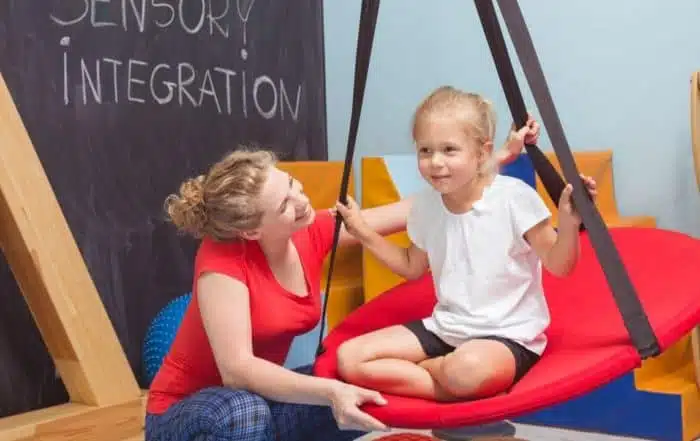
Understanding Autism through the Lens of Sensorimotor Features and Early-Developing Brain Regions
Sensorimotor differences are commonly reported in autistic individuals. However, the daily-life impact and neurobiological basis of motor differences are not clear. This talk will discuss sensorimotor differences commonly reported in
Towards the Development of a Diagnostic Test for Autism Spectrum Disorder: Data Science Meets Metabolomics
Hear Juergen Hahn, Ph.D., ARI Scientific Advisory Board member, discuss how using machine learning can lead to biomarker discoveries in autism research. Handouts are online HERE
How Genetics is Shaping the Field of Autism Research
Learn about how research on genetic influences is shaping our understanding of autism. About the speaker: M. Pilar Trelles, MD, is a licensed and
Evidence That Speaks: Prioritizing Proven Communication Supports for Non-Speaking Autistic Children
Connie Kasari, PhD, details what contemporary research reveals about supporting non-speaking or minimally verbal autistic children. She highlights how far the field has come in the past two decades and emphasizes the