Connie Kasari, PhD, details what contemporary research reveals about supporting non-speaking or minimally verbal autistic children. She highlights how far the field has come in the past two decades and emphasizes the need for contemporary research to focus on what strategies benefit whom and why. The speaker discusses JASPER, a modular intervention based on social communication. She outlines recent studies and video examples showing positive language outcomes for JASPER on its own and in tandem with other interventions. Kasari underscores the usefulness of AAC devices in spoken language development, noting the lack of interventions that use even low-tech augmentative supports. The speaker summarizes her presentation and focus for future research before the Q&A.
Handouts are online HERE
In this webinar
2:00 – Early intervention in autism
7:00 – Core challenges: Video
14:16 – Study: JASPER intervention outcomes
26:00 – Intervention trajectories
31:50 – Study: Intervention combinations and AAC
36:11 – Implications for practice
45:45 – AAC case studies
46:45 – Summary
48:00 – Q&A
Early intervention and social communication
Kasari explains that nearly all autistic children will require support/intervention on engagement, imitation, joint attention, and play (2:00). She states that the goal of early intervention is to reduce the number of autistic children who have significant language impairment by the time they start school. Language ability remains one of the strongest predictors of positive long-term outcomes, making support strategies that target social communication skills—such as joint attention, engagement, and play—especially critical (4:00). Importantly, Kasari notes that research hasn’t focused on for whom an intervention works or why a particular intervention provides benefit for certain people. Understanding this is critical to expanding care and assessment across the board (5:30).
The speaker discusses core challenges that may trigger an intervention and shows videos comparing social communication in an autistic and a non-autistic child at 18 months old. Kasari highlights differences between the videos, noting the child with autism is more interested in looking at the objects than communicating (7:00). She explains how this pattern often translates to parent play, making it feel frustrating or not enjoyable for many parents/caregivers, and discusses two video examples of this (9:30).
Social Communication Research
The speaker says we know the least about children who are most delayed in development, who have limited language skills, and those whose families have less access to information about studies in their communities. She explains that most autistic children have never been in a research study. As a result, our evidence base does not represent the entire spectrum of autism (13:15). Kasari and her team focus on researching interventions for non-speaking and minimally verbal autistic children that can be conducted in community settings.
JASPER: Joint Attention, Symbolic Play, Engagement, and Regulation
The presenter describes JASPER, a comprehensive social communication/language intervention that can float inside other interventions, be used on its own or used sequentially (14:60). Kasari presents one of her recent publications comparing outcomes in 164 children, 3 -5 years old, across three sites after four months receiving Discrete Trial Training (DTT) or JASPER (video examples) (19:00). Results from the study show that both groups made significant language gains, and 45% moved toward phrased speech (putting words together).
Intervention trajectories
The goal of the intervention was to avoid the label of minimally verbal or profound autism by school age. Kasari defines profound autism as children with a developmental quotient (DQ) below 50, aged 8 or older, with poor adaptive skills (often minimally verbal or non-speaking). She notes that this is a relatively new term and considers how early we can predict these outcomes (26:00). The speaker reviews DQ data for a group of 264 children at very young ages. By age 8, 47% did not meet criteria for profound autism, although 25% of this group had a DQ lower than 50 at age 4 (28:30).
Kasari summarizes study takeaways, noting that DQ can help predict later development but is not a perfect predictor on its own. She reiterates the importance of early intervention and highlights understanding the 25% who moved off trajectory as a critical next step (29:25).
Combination interventions and assistive technology (AAC)
The presenter reiterates the heterogeneity in response to interventions, underscoring the need to personalize, tailor, and target interventions according to each person. This will also help us address for whom the intervention works and why. Kasari defines adaptive intervention designs as a sequence of decision rules that specify whether, how, when (timing), and based on which measures, to alter the dosage (duration, frequency, or amount), type, or delivery of treatment(s) at decision stages in the course of care – this is what her group employs (29:45).
Kasari details a study with 61 children, 5-8 years old, who are minimally verbal and had received 2 years of intensive early intervention (most ABA). All children received JASPER plus EMT, a spoken language intervention. Half of the children were randomized to receive AAC devices to test if these supports help with spoken language. Children attended two sessions per week, and at the 12-week follow-up, those assessed as slow responders were re-randomized to either add AAC or to up to 3 sessions per week. Outcomes for socially communicative utterances were assessed after another 12 weeks (31:50). Those who used AAC devices from the beginning showed significant increases and also had more novel words and joint attention language. Those with only JASPER and EMT made slow but steady progress. Researchers also found that from entry to midpoint to exit, parent-initiated engagement stayed the same while child-initiated engagement increased (34:15).
Implications for practice
The speaker notes that assistive technology are still not used regularly with children, be it a device, sign language, or another low-tech augmentative device; they are not being used as much as they should (36:11). Kasari returns to the child from the first video and describes how they changed tactics the second day by lowering the play level and adding an AAC device with button-words (video provided) (40:00). She notes that this child entered regular education at age 7, speaking full sentences. He used the AAC for a few years as a transition to spoken language. The presenter describes another case in which a child used AAC to support communication. He made progress over time, eventually asking the therapist to put phrases that he hears in the AAC device so he can listen to them and learn the sounds. In a follow-up video, the child is speaking in full sentences (45:45).
Kasari summarizes her presentation, highlighting that we can improve social communication and language outcomes for delayed autistic children and that these early skills need to be direct targets for support/intervention strategies. She reiterates how research must inform practice and, therefore, focus on answering questions about personalized interventions (how long do we wait, what do we change to?) (46:45) before the Q&A (48:00).
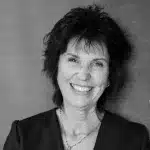
Since 1990, Connie Kasari, Ph.D., has been on the faculty at UCLA, where she teaches both graduate and undergraduate courses and has been the primary advisor to more than 70 Ph.D. students. She is a founding member of the Center for Autism Research and Treatment at UCLA. Her research aims at the development of novel, evidence-tested interventions implemented in community settings. Recent projects include targeted treatments for early social communication development in at-risk infants, toddlers, and preschoolers with autism, and peer relationships for school-aged children with autism. She has led many multi-site federally funded projects investigating the efficacy of interventions for children with autism and other neurodevelopmental conditions. She is on the science advisory board of the Autism Speaks Foundation and regularly presents to both academic and practitioner audiences locally, nationally, and internationally.