

Dr. Amber Davis discusses the intersection of race, disability, and autism as it pertains to diagnosis, care, and oppression. She notes autism-related disparities in access to care within the Black or African-American population and highlights the importance and potential impact of adopting an intersectional lens to autism understanding and care. Davis outlines her recent research on resilience factors, oppressive experiences, intersectionality, and culturally appropriate interventions. She asserts the need for more research specific to Black autistic children and adults and considers research implications before the Q&A.
In this webinar:
4:00 – Introduction & context
9:45 – What is autism
11:40 – Autism-related disparities
14:13 – Adult disparities
17:00 – Intersectionality
21:06 – Resilience research findings
25:00 – Findings on intersectional experiences
28:00 – Culturally appropriate interventions
31:00 – Implications
33:50 – Conclusions
35:00 – Q&A
Background
Davis gives context for her area of research, explaining that it came out of noticing the apparent dismissal of the Black population in autism research and the lack of information on risks or resilience factors for this population (4:15). She exclaims that “if you can’t see a problem, you can’t solve a problem.” The presenter shares a clip of NBA star Tony Snell discussing his journey to diagnosis following the diagnosis of his 18-month-old son. Davis summarizes the video, highlighting that Snell felt that if he were diagnosed younger, it wouldn’t have been a protective factor given the limiting assumptions of autistic people in that era (8:45).
The speaker defines autism as a brain-based neurodevelopmental condition characterized by differences in social communication and behavioral patterns. She highlights that we don’t know what autism looks like in the Black U.S. population, especially in Black women and female-presenting people (9:45). Though the data doesn’t show it, autism affects all racial and ethnic groups.
Autism-related disparities in the U.S.
Black autistic children and young people
The presenter explains that Black autistic children and young people have historically received autism diagnoses at lower rates and later ages than their white counterparts. Though the diagnosis gap is closing, the disparity in services available to Black autistic people remains. Davis cites recent research showing that Black children receive lower rates of outpatient services (5.2%) than white children, even though Black children identify with autism and co-occurring intellectual disability at a higher rate than all other racial groups (50.8% among 8-year-olds). She underscores that such disadvantages faced by Black autistic children and their families have longitudinal, often life-long consequences (11:40).
- Understanding Racial and Ethnic Disparities in Autism-Related Service Use Among Medicaid-Enrolled Children (Bilaver et al., 2021)
Black autistic adults
Black autistic adults also face disparities in access to care, including Medicaid and Medicare, across all ages. Black autistic adults are less likely to be dual-eligible (Medicaid and Medicare), and overall, fewer medicaid dollars are spent on Black autistic adults, highlighting huge disparities in access and application of care. Black adults with autism also have the highest rate of co-occurring schizophrenia-spectrum disorders and higher odds of diabetes and cardiovascular disease among the medical population (14:13).
- Inequities in Receipt of the North Carolina Medicaid Waiver Among Individuals with Intellectual Disability or Autism Spectrum Disorder (Franklin et al., 2022)
- Racial and ethnic disparities in benefits eligibility and spending among adults on the autism spectrum: A cohort study using the Medicare Medicaid Linked Enrollees Analytic Data Source (Benevides et al., 2021)
- Autism Prevalence in the Medicaid Program and Healthcare Utilization and Costs Among Adult Enrollees Diagnosed with Autism (Jariwala-Parikh et al., 2019)
Intersectionality: importance and impact
Davis describes autism as a spectrum that falls under the broader umbrella of neurodiversity. Although she focuses on autism, she often expands to draw parallels between Black persons with autism and other neurodiversities (15:50). The speaker outlines intersectionality as Kimberlé Crenshaw coined it. This framework gives context to the overlapping experiences of oppression experienced by African American women (now expanded). The fundamental tenet of intersectionality is that social identities are not independent. This shines a light on subpopulations within already marginalized groups, such as neurodiverse persons within the Black or African-American population (17:00)
- Intersectionality and Social Security Age-18 Redetermination: Reducing the Stress and Trauma of Transition for Black Transition-Age Youth with Disabilities (Davis & Gourdine, 2022)
Research findings
Davis outlines her recent studies and their findings.
Resilience research
The presenter highlights the importance of resilience research, which blends risk and resilience factors within multiply-marginalized populations. She outlines a recent publication assessing the intersection of race and disability with an emphasis on strengths and experiences of oppression (18:05). She shares two personas developed from the study:
Persona 1 – Baffled Ben
- Age: 24 years old
- Desires: Do what he likes, like driving around town during the week and returning home.
- Challenges: Difficulty with social cues, and so does not feel safe in society because he can run into the police and may stand out from others. Lack of understanding around social norms based on white supremacy means he can accidentally end up in places or situations that are racist.
- Quote: “As Black men, we are already perceived as aggressive, then [that’s] amplified by being autistic.”
Persona 2 – Daisy (delayed diagnosis)
- Age: 26 years
- Desires: She wants to live a life with support for living with autism and to build a community of advocates who also have a confirmed diagnosis.
- Challenges: In the past, she feared being able to afford a diagnosis. She experienced gaslighting and mislabeling from providers, especially when she was younger. Her parents’ concerns weren’t taken seriously, so early interventions were not received.
- Quote: “Things that happen to us do not seem to matter as much.” (20:06)
——-
- Resilience and strengths in the Black autism community in the United States: A scoping review (Davis et al., 2024)
Intersectionality
An online survey of 34 participants examined differences in discrimination and stress between Black adults with and without autism. Responses show heterogeneity in reasons for daily discrimination, where 48% reported being black as the single reason, 30% reported being autistic and black (intersectional), and 19% autism as the reason for daily discrimination. Contrastingly, positive racial and autistic identity can be protective factors (21:06). Davis notes that race- or disability-based discriminatory experiences can be episodic or cumulative, underscoring the importance of integrating the intersectional lens.
(Davis et al., 2022)
Another study, which analyzed open-text responses of the same participants, found that all participants described difficulties associated with being seen as criminal or unsafe within the wider society. At the same time, those with autism reported more racial discrimination and more negative police encounters than their allistic (non-autistic) counterparts. Eleven of the fourteen participants shared that they have experienced discrimination across settings, including work, home, school, and generally within society. Davis explains that these findings showcase the difficulties that ensue for people confronted with racial discrimination, particularly emotional difficulties (25:06).
Culturally appropriate interventions
Standard evidence-based autistic interventions were designed to be universal and have not been tailored to Black families or children — which can reduce their impact. In a recent systematic review, Davis and colleagues used the Cultural Adaptation Checklist to assess published interventions (28:04). Researchers found that designing and adapting for Black communities has immense value and that interventions for this population tend to focus on parental empowerment and capacity for advocacy in the face of systematic racism. The study highlighted a lack of intervention specifically for Black autistic people, especially for adults and older adults. Davis notes that very few interventions have been built to strengthen the resilience factors across the different age spans of Black autistic populations (29:25).
- Autism interventions designed or adapted for the Black/African American population: A systematic review (Davis et al., 2024)
Implications
The presenter outlines implications for this research, including continued advocacy and allyship within the broader autism population. She emphasizes the need to continue this research so that intersectional approaches may be integrated into clinical practices. Davis also asserts the need for culturally responsive trauma-informed care, reminding viewers of the intersectionalities playing out and the potential harm that many people have experienced (31:00).
Say their names
Davis takes time to name Ryan Garner, Elijah McClain, and Isabella Tichenor, all Black children and young people who died prematurely due to their intersectional experiences. Police killed Ryan and Elijah, Ryan in his own home, and Elijah while being forcibly detained and then illegally injected with ketamine. Isabella took her own life after experiencing intense bullying and disregard from the school system. Davis also mentions Emmitt Till and Charles Oatman, neurodiverse Black children whose deaths sparked civil rights movements and demonstrations in the Southern U.S. during the 1960s (32:15). She shares all of this to underscore the oppression faced by Black persons in the U.S. and the urgency we should feel in integrating the intersectional lens into autism research and care. It could save lives.
Conclusions
Davis states that it continues to be important for all autistic people to be seen, understood, and supported. She emphasizes that the heterogeneity of experiences in autism occurs alongside both socio-cultural and systemic/structural factors that cannot be ignored. Attempting to erase the reality of the intersections of race and disability only perpetuates harm, abuse, and disenfranchisement (33:50). The speaker provides thanks, acknowledgements, and contact information before the Q&A, where she discusses the nuances of diagnosis across the lifetime, how to advocate for care and acceptance, and much more (35:00).
Originally published on February 19, 2025
About the speaker:
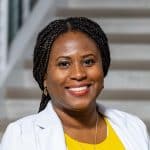 Dr. Amber Davis a Research Associate at the Disability Health Research Center. As a licensed clinical social worker with 7+ years of clinical experience in underserved communities, Dr. Davis has an intersectional lens for supporting minoritized persons with disabilities. As a trauma-informed clinician scientist, Dr. Davis’s research investigates the role of cumulative adversities and intersectional resiliency factors on the transition to adulthood/early adulthood for Black young adults with developmental disabilities with a focus on autism. She brings a micro-level perspective to providing culturally relevant interventions coupled with a macro-level lens to disrupt ableism and racism more upstream.
Dr. Davis is pioneering in her work to center the experiences of doubly marginalized transition-age youth and adults for the improvement of this population’s health outcomes across the adult lifespan. She has publications in peer-reviewed journals specific to this population and other disability areas. She has influence on the national level, with the local community, and in academic/clinical settings with the intent of raising consciousness and advancing intersectional disability justice.
Dr. Davis earned a B.S. in Family Youth and Community Sciences from the University of Florida, an MSW from Florida State University, and a PhD in Social Work from Howard University. She has trained as a T-32 postdoctoral scholar at the UC Davis MIND Institute and Johns Hopkins University to develop her knowledge and research expertise in autism and addressing trauma in diverse populations, including the Black population and persons with developmental disabilities.
Take the knowledge quiz
Can’t see the quiz below? Take it online HERE
Emerging Research on Autism Rates and Covid
Free webinar at 1:00 p.m. Eastern time (US), April 22, 2026 Tune in to hear about the Columbia University COVID-19 Mother Baby Outcomes Initiative (COMBO), which resulted in the first report demonstrating that

Understanding Autism through the Lens of Sensorimotor Features and Early-Developing Brain Regions
Sensorimotor differences are commonly reported in autistic individuals. However, the daily-life impact and neurobiological basis of motor differences are not clear. This talk will discuss sensorimotor differences commonly reported in

Towards the Development of a Diagnostic Test for Autism Spectrum Disorder: Data Science Meets Metabolomics
Hear Juergen Hahn, Ph.D., ARI Scientific Advisory Board member, discuss how using machine learning can lead to biomarker discoveries in autism research. Handouts are online HERE

How Genetics is Shaping the Field of Autism Research
Learn about how research on genetic influences is shaping our understanding of autism. About the speaker: M. Pilar Trelles, MD, is a licensed and

Disparities in Autism Ascertainment in Black Children
Handouts are available HERE You can access the ongoing study Dr. Dickerson discusses during the Q&A HERE Learn about disparities in autism ascertainment in Black children and accessible treatment models

Nutrition Research Updates: Five Underappreciated Nutrients that Neurodivergent Kids May Be Missing
Vicki Kobliner, MS, RDN, reviews current nutrition research and shares practical strategies to support the health of neurodivergent children.Handouts are online HERE About the speaker: