Dr. Rosa Krajmalnik-Brown, Ph.D., discusses her recent studies on gut microbiota in individuals with autism who have gastrointestinal (GI) problems. She outlines what we know about human microbiomes, how they interact with our bodies, and the potential they hold for treating autism symptoms. The presenter reviews a 2017 open-label trial of Microbiota Transfer Therapy (MTT) and a 2019 follow-up study. Both studies showed GI and behavioral symptom improvements and positive changes in the gut microbiome environment. Krajmalnik-Brown asserts the need for double-blind, placebo-controlled clinical trials and urges listeners not to attempt such treatments at home. She outlines other relevant studies before closing with a question-and-answer session.
Take the knowledge quiz for this presentation HERE
Learn more about our speaker, Dr. Rosa Rosa Krajmalnik-Brown HERE
In this webinar
3:10 – Human Genome and Microbiome projects
5:30 – Microbes in the human body
8:50 – Impacts, interventions, and biomarkers
11:50 – GI problems and autism severity
12:30 – Study: Short-term benefit of oral vancomycin
13:40 – Study: Microbial diversity and relative abundance
15:50 – Replication study
16:40 – Other studies on gut bacteria in children with autism
19:00 – Guidelines for fecal transplants and microbe selection
20:13 – Open-label Study: MTT and gut ecosystem
23:00 – Key findings: Bacterial and microbial communities
27:30 – Key findings: GI and behavior symptoms
29:20 – Study: Two-year follow-up
30:00 – Key findings: Bacterial and microbial communities/environments
32:10 – Key findings: GI and behavior symptoms
35:50 – Nex steps
37:50 – Study: Blood metabolite changes
39:90 – Study: Fruit fly sample
41:29 – Summary
42:15 – Q & A
Summary
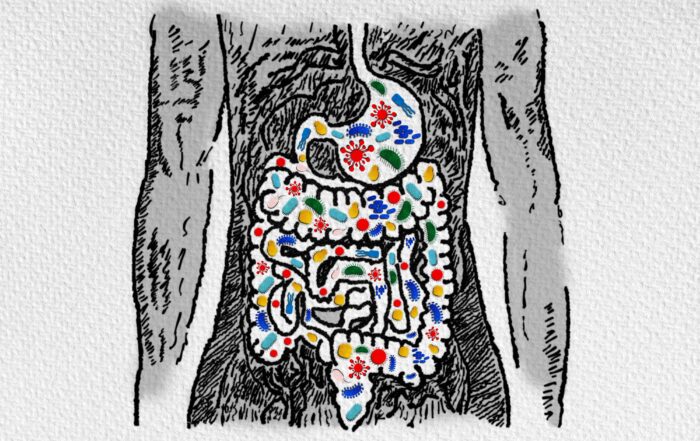
The human body contains trillions of microbial cells or microbiota. In fact, Dr. Krajmalnik-Brown explains, the microbial genome within each of us contains more than 100 times the number of our human genes. Around 30% of these microbes occur in the GI tract and make up the gut microbiome (5:30). Initial studies from Dr. Krajmalnik-Brown and her lab found lower gut microbiota diversity and depleted levels of beneficial microbes such as Prevotella and Bifidobacteria in children with autism than in typically developing individuals (13:40). These and other related findings (16:00) suggest a link between the gut microbiome and autism-like behavior (11:50). Because environmental exposures are more effective in shifting microbiomes than are genomic factors (10:00), modifying gut microbiomes is a potential treatment for GI and behavioral difficulties in individuals with autism (18:30).
The presenter outlines a 2017 open-label trial of Microbiota Transfer Therapy (MTT) in 18 children with autism who have GI issues (20:12). The treatment involved a bowel cleanse, stomach-acid suppressant, antibiotics, and fecal microbiota transplants. Treatments lasted ten weeks, and data (stool, swab, and parent reports) were collected for 18 weeks (22:00). This study showed significant improvements in the diversity of gut microbiota (23:10 – 27:20), GI symptoms, and autism-related symptoms (27:25 – 29:00). Improvements were not only observed during the ten weeks of treatment but continued throughout the entire 18-week period. The presenter repeatedly stresses that only trained professionals with access to specific and clean samples should perform MTT. Do not attempt such treatments at home as they can cause severe harm or fatality (19:00; 35:30).
A follow-up study of the same participants two years after treatment (29:20) revealed intriguing results. For example, GI symptom improvements regressed slightly but maintained healthier ratings than baseline measures (32:41). Further, autism-related behavioral symptoms improved even more after treatments concluded (33:30), and eight patients showed minimal-to-no symptoms at follow-up (34:00). Finally, important changes in gut microbiota seen at the end of treatment remained at follow-up (30:00). Krajmalnik-Brown excitedly highlights that patient gut microbiome diversity did not simply mimic the donors’ but, over time, developed distinct microbiomes (31:00) with a relative abundance of Bifidobacteria and Prevotella (31:55). Similarly, the average variance between participants’ microbiota diversity and their donors’ was equal to the variance between neurotypical individuals (31:30). She explains how these findings reveal that gut microbiota did not simply change, but the actual environment of the gut evolved (30:30).
These observations demonstrate the long-term safety and efficacy of MTT as a potential therapy to treat children with autism who have GI difficulties. Krajmalnik-Brown emphasizes that these were open-label studies and should be taken with a grain of salt (35:10). However, she states that such results warrant a double-blind, placebo-controlled clinical trial for scientific validity and to get us closer to approving such treatments (35:50). Krajmalnik-Brown outlines metabolite (37:50) and fruit fly (39:30) sample studies and summarizes her presentation (41:29). She closes with a question-and-answer session where she discusses sample screening, treatment processes, special diets, and more (42:15).
The study described in this recording – Long-term benefit of Microbiota Transfer Therapy on autism symptoms and gut microbiota – is online here.
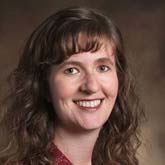 Dr. Rosa Krajmalnik-Brown is an Associate Professor at the School of Sustainable Engineering and The Built Environment and the Swette Center for Environmental Biotechnology at Arizona State University. She Joined the SSEBE faculty in 2007. She has Ph.D. in Environmental Engineering from Georgia Tech. She was awarded an NSF CAREER award, was selected as one of 40 under 40 leaders in Phoenix, AZ. Funding for her research has come from many federal agencies including NIH, DoE, DoD, and NSF. She pioneers research on gut microbiome and autism and is the author of 3 patents and more than 90 peer-reviewed publications.
Dr. Krajmalnik-Brown specializes in molecular microbial ecology for bioremediation, the use of microbial systems for bioenergy production, and the human intestinal microbial ecology and its relationship to obesity, bariatric surgery, and autism. Learn more about study enrollment and donations supporting the Krajmalnik-Brown Lab.
Research Updates: Gastrointestinal Issues and Autism
Free webinar at 1:00 p.m. Eastern time (US), July 29, 2026 Harland Winter, MD, will discuss his research on gastrointestinal conditions in individuals with autism. Dr. Winter is an active investigator and educator
Research Updates: Microbiome Research and Autism
Free webinar at 1:00 p.m. Eastern time (US), May 20, 2026 Rosa Krajmalnik-Brown, Ph.D., will discuss her research on gut microbiota in individuals with autism who have gastrointestinal (GI) problems. She will share
The autism-associated 16p11.2 microdeletion variant impacts the effects of microbiota disturbances on hippocampal development and behavior throughout the lifespan
Handouts are online HERE Approximately 17% of children are diagnosed with NDDs, including ASD, ADHD, and ID, which are highly heterogenous, frequently co-occur, and manifest in early life in sex-dependent fashion.
Editorial – Fecal Microbiota Transplantation and Autism
Over the past several years, Fecal Microbiota Transplantation (FMT) has become the subject of growing interest in the autism community due, at least in part, to the increased awareness of
New multi-national study adds to evidence linking alterations of the gut microbiome to autism
Strong new evidence linking alterations of the gut microbiome to autism spectrum disorders (ASD) comes from a new multi-national study by James Morton and colleagues. In the study, researchers in North America,
Constipation in infancy associated with higher likelihood of autism diagnosis
More evidence linking autism spectrum disorders (ASD) to gastrointestinal problems comes from a study by researchers in Taiwan and the United States, who report that ASD occurs at an elevated rate in