

This is a joint presentation by ARI and the World Autism Organisation.
Professor Carmelo Rizzo, MD, discusses adverse reactions to food and the critical role of intestinal microbiota in autism. He outlines the history of clinical nutrition and highlights the role of chronic inflammation in disease pathology. The presenter considers the interplay of inflammation, altered gut absorption, and food intolerances, underscoring the high occurrence of GI issues in autism and their correlation to behavioral characteristics. Rizzo discusses implications for clinical practice before the Q&A.
This is a joint presentation by ARI and the World Autism Organisation.
Handouts are available HERE
In this webinar:
0:00 – WOA & ARI introduction
6:10 – Speaker background and introduction
9:30 – Total load effect
12:30 – Clinical nutrition
15:44 – Food adverse reactions & inflammation
19:45 – Stress response theory
23:00 – Food intolerance vs. food allergy
24:50 – Altered gut absorption
29:00 – Food intolerances
31:30 – The gut microbiome
34:50 – Microbiota and autism
40:28 – Clinical implications
41:45 – Q&A
Introduction
Rizzo explains the total load effect as the idea that our overall health depends on numerous factors, including genetics, emotional and physical environments, inhalants, electromagnetic fields, and nutrition, to name a few (9:30). He highlights nutrition as a critical aspect of prevention and care for many conditions, citing research on the connection between food allergies, behavior, and diet from the early 20th century. Basic principles of clinical nutrition emphasize removing the toxin or chemical and repairing any chronic damage/inflammation, particularly to sensitive organs (12:30). The presenter notes pioneering researchers in ecology and how their work has impacted how contemporary researchers and practitioners understand complex neurological conditions (13:25).
- Neuropathic manifestations in infants and children as a result of anaphylactic reaction to foods contained in their dietary (Shannon, 1922)
- Elimination Diets and Patient’s Allergies. A Handbook of Allergy (Rowe, 1944)
Food adverse reactions & inflammation
Food adverse reactions include allergies, pseudoallergies, hypersensitivity, toxic reactions, and food intolerances, all of which can lead to inflammation (15:44). Rizzo describes how inflammation keeps us alive by destroying bacteria and viruses but how it can cause intense injury to organs and tissues if not addressed. Inflammation occurs differently in each person and can manifest in multiple ways simultaneously. Common external presentations of inflammation include osteoarthritis, sore throat, eczema, rhinitis, migraines, and multiple sclerosis (17:30). The presenter notes the connection between inflammation and depression, cancer, obesity, Alzheimer’s, and heart disease, underscoring the importance of correctly identifying and addressing chronic inflammation (18:40).
Rizzo defines stress as a non-specific response of the body to harmful stimuli (19:45). To illustrate immune system function under the stress theory, he uses the analogy of a barrel holding water (functioning). At first, it holds well based on its build (genetics) and age, but the barrel can only hold a certain amount of water (adapt to a certain point). If the water flow (environmental stressor) doesn’t stop, water begins to spill out of the barrel (physical manifestation/symptom). Those with a full barrel develop food or chemical imbalances that present as conditions or symptoms (20:40). The speaker describes complementary science, underscoring the ability to identify what substances should be added or removed from the body based on specific indications (22:00).
Altered gut absorption
The speaker highlights the importance of intestinal microbiota in the creation and absorption of crucial vitamins and nutrients, noting the specific balances required for proper immune function (24:50). He details the layers of the intestinal barrier and underscores the role of the mucosal immune system within the gut (26:25). Alterations to the intestinal barrier cause gut permeability, allowing macromolecules into the body where they may be recognized as foreign and activate the body’s defense mechanism. Anything from genetics to emotional stress can cause changes in the gut microbiome (27:45).
Food intolerances
Food intolerances are characterized by an inability to absorb or metabolize certain nutrients, causing an abnormal reaction to specific foods (23:00). Rizzo provides examples of biological food families and highlights their importance in addressing food intolerances. If ingestion of foods within the same family continues, he explains, the body won’t properly detox, and intolerance will persist (29:00). Food intolerances can manifest in any organ, and the reaction window is 72 hours, so what feels like a direct reaction to one food could be a buildup of inflammation in the body (30:10). Symptoms related to food intolerances occur in the central nervous system (headache, depression), genital-urinary systems (vaginal irritation, cyclic cysts), respiratory systems (nasal congestion, rhinitis), skeletal muscle (muscular cramps, articular cogency), gastrointestinal tract (nausea, IBS, Crohn’s disease), and skin (eczema, rash, facial paleness) (31:15).
The gut microbiome
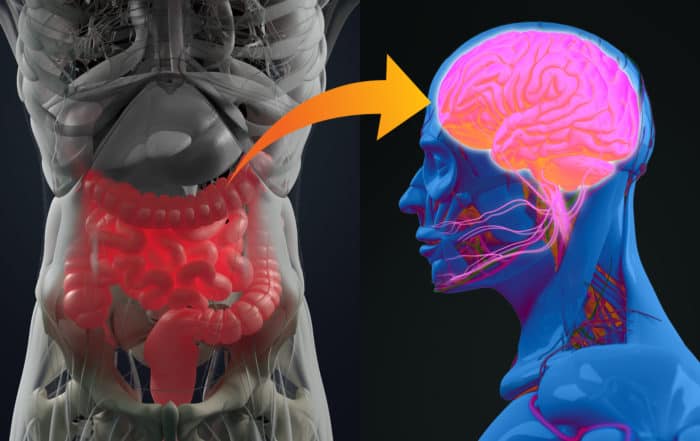
The intestinal microbiota is composed of billions of cells and is one of the largest, most complex bacterial ecosystems on the planet (31:30). Rizzo discusses the development paths and general functions of the gut microbiota for infants, children, adults, and the elderly (32:30). The microbiome’s metabolic functions, such as vitamin production and amino acid synthesis, make it a critical factor in disease prevention and care (34:00).
Microbiota and autism
Individuals with autism have unique intestinal bacterial populations correlated with various autism traits. The presenter outlines a 2005 study on autism-related behaviors and GI experiences with more than 900 participants (34:50). The most common GI disturbances reported were constipation (48%), diarrhea (28%), abdominal pain (55%), and gastroesophageal reflux (10%), with an inflammatory index of 40% (37:20). Histological (tissue and cell structure) findings showed esophagitis, chronic gastritis, colitis, and eosinophilic gastritis (38:08). Participants were prescribed pharmacological and dietary interventions.
At a twelve-month follow-up, 150 participants reported improvements in GI pain (64%), bowel complaints (84%), reflux (41%), muscle mass (40%), hyperactivity/aggression (65%), attention (34%), and sleep-wake rhythm (22.1%). Rizzo asserts that these findings indicate that anxiety, sensory-responsivity, and GI issues are interrelated phenomena for people with autism (38:50).
- Anxiety, Sensory Over-Responsivity, and Gastrointestinal Problems in Children with Autism Spectrum Disorders (Mazurek et al., 2013)
Implications for clinical practice
Outside of autism, the gut microbiome is central to the prevention and care of type two diabetes, cardiovascular diseases, liver disease, hyperlipidemia, and many other conditions (34:50). Understanding the integral role of the gut microbiome in systems across the body must be a priority for clinical research and practice (40:28). Rizzo concludes that the development of the microbiota field must involve cardiologists, allergists, psychiatrists, and other specialists concerned with pathological conditions (40:43). He provides thanks before the Q&A session where he discusses chronic inflammation, biological food groups, and much more (41:45)
About the speaker:
 PROF. CARMELO RIZZO, MD practices medicine in his Rome clinic. He graduated in 1984 at the Faculty of Medicine in Rome. He grew his interest in the field of nutrition. He started, first in Italy, from United States, where he lived and studied in the early years of his professional training, the Cytotest method, subsequently revised, modified and patented in Italy. Always looking for new scientific methods, he has carried out numerous studies in the field of food allergies comparing different diagnostic methods and applying clinical principles inspired by English and US literature. He created a group of “clinical ecologists” by providing training and research opportunities in the field of nutrition and allergy.
Since 1986 he collaborates with Prof. Leonard McEwen director of McEwen Laboratories LTD of Pangbourne (Berkshire) for the development and diffusion of the EPD polyvalent desensitizing therapy in Italy, for this reason since 2013 he has also been involved in the production and marketing. He is also a clinical consultant in many foreign countries such as Russia, Albania, Romania, Azerbaijan, Poland where he has spread his clinical and therapeutic methods and diagnostic tests to support his studies. Founder of numerous scientific organizations aimed to train professionals, participates in various associations for Autistic Disorders and ADHD. He participated as a lecturer and taught in various Italian universities: University of Urbino, Pavia University, Biomedical Campus of Rome, Telematic University of Rome “Unicusano”, Consorzio Universitario HUMANITAS–LUMSA.
Honorary professor at State University of Medicine in Tirana.
Lecturer at Scientific and Practical Center for Children’s Psychoneurology in Moscow.
Researcher and Lecturer for Balkans capital for ASD and ADHD.
Associate Professor at Faculty in Mental Health Education Ulster University, College of Medicine and Dentistry – UK
Take the knowledge quiz
Can’t see the quiz below? Take it online HERE
2026 Research Updates: GI Symptoms & Behavior
Free webinar at 1:00 p.m. Eastern time (US), December 2, 2026 Dr. Bradley Ferguson, PhD, a 2024 research grant recipient, will share emerging research on the interaction of GI symptoms and behavior in autism.
Research Updates: Gastrointestinal Issues and Autism
Free webinar at 1:00 p.m. Eastern time (US), July 29, 2026 Harland Winter, MD, will discuss his research on gastrointestinal conditions in individuals with autism. Dr. Winter is an active investigator and educator
Research Updates: Microbiome Research and Autism
Free webinar at 1:00 p.m. Eastern time (US), May 20, 2026 Rosa Krajmalnik-Brown, Ph.D., will discuss her research on gut microbiota in individuals with autism who have gastrointestinal (GI) problems. She will share
Nutritional Neurobiology of Autism: Revisiting the Zinc Hypothesis
Free webinar at 1:00 p.m. Eastern time (US), May 13, 2026 Recent data support a model in which altered zinc biology may act as a modifiable risk factor within
Nutrition Research Updates: Five Underappreciated Nutrients that Neurodivergent Kids May Be Missing
Vicki Kobliner, MS, RDN, reviews current nutrition research and shares practical strategies to support the health of neurodivergent children.Handouts are online HERE About the speaker:
Nourishing the Brain: How Targeted Nutrition Can Transform Outcomes in Autism
You can take the knowledge quiz HERE Handouts are available HERE List of referenced nutrient deficient studies available HERE If you're a parent searching for answers beyond standard