A new study from China indicates that while physical exercise can help reduce stereotypic behaviors in children with autism spectrum disorders (ASD), it is important to select exercises that are similar to the behaviors.
In earlier research involving 30 children with ASD, C. Y. Andy Tse and colleagues examined the effects of a ball-tapping exercise on stereotypic behaviors. In the ball-tapping exercise, participants were asked to tap a playground ball as many times as they could for 15 minutes. The researchers found that compared to a control activity (story time), the ball-tapping exercise resulted in significant reductions in hand flapping but not in body rocking.
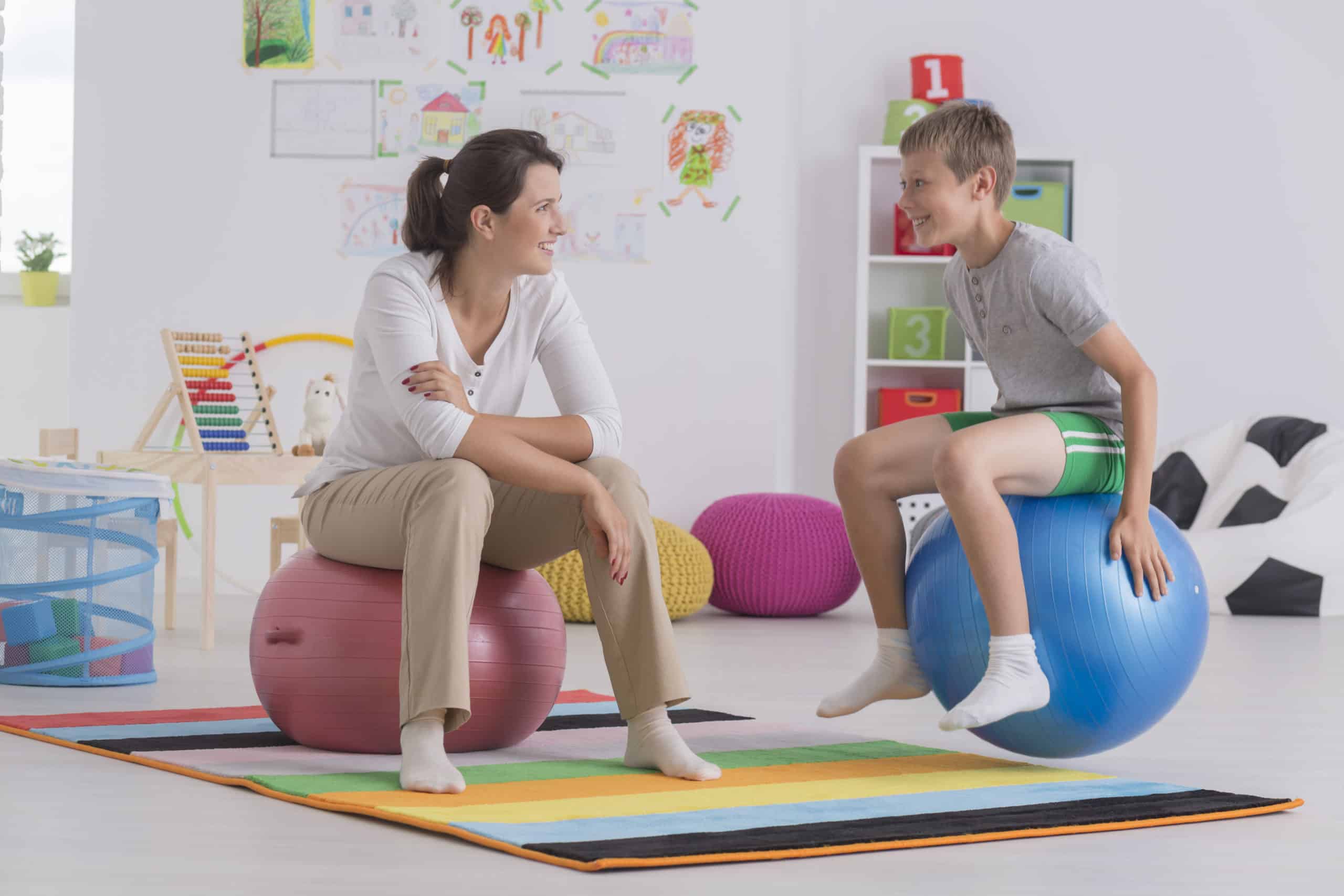
In a new study involving 21 children with ASD, the researchers compared the effects of ball-tapping and jogging on stereotypic behaviors. This time, the children participated in the ball-tapping activity one day, jogged one day, and spent one day in the control group. The schedule was randomized so the children did not all do the activities in the same order.
The researchers report, “Results revealed that only hand-flapping stereotypic behaviors were significantly reduced in the ball-tapping exercise, while only body-rocking stereotypic behaviors were significantly reduced in the jogging exercise condition.” Reductions in stereotypic behavior lasted approximately 45 minutes.
The researchers conclude, “Physical exercise should be topographically matched with stereotypic behavior in order to produce desirable behavioral benefits in children with ASD.”
—
“Investigating the matching relationship between physical exercise and stereotypic behavior in children with autism,” Andy C. Y. Tse, Venus H. L. Liu, and Paul H. Lee, Medicine and Science in Sports and Exercise, September 25, 2020 (epub prior to print publication). Address: Andy C. Y. Tse, Department of Health and Physical Education, The Education University of Hong Kong, Hong Kong, China, [email protected].
—see also—
“Choosing an appropriate physical exercise to reduce stereotypic behavior in children with autism spectrum disorders: a non-randomized crossover study,” C. Y. Andy Tse, C. L. Pang, and Paul H. Lee, Journal of Autism and Developmental Disorders, Vol. 48, 2018, 1666-1672. See address above.
This article originally appeared in Autism Research Review International, Vol. 34, No. 4, 2020

Editorial: What we breathe matters – Rethinking air pollution and autism
For nearly sixty years, the Autism Research Institute (ARI) has tried to understand autism by looking beyond surface behaviors and asking deeper biological questions. From the beginning, Bernard Rimland challenged the dominant

Editorial: Invisible threats – the role of environmental toxins in autism
As our knowledge about autism continues to evolve, so does our understanding of its root causes. For many years, professionals blamed “refrigerator parents” and prescribed psychoanalytic therapy. Once the psychogenic theory was
ARI’s 2025 Impact
Advocating for Independent Research and Education For nearly six decades, ARI has funded groundbreaking research, expanded educational initiatives, and brought clinicians and scientists together worldwide. Yet researchers and clinicians continue to face unprecedented