

 For nearly sixty years, the Autism Research Institute (ARI) has tried to understand autism by looking beyond surface behaviors and asking deeper biological questions. From the beginning, Bernard Rimland challenged the dominant view of autism as a purely psychological condition and argued that biology mattered (Rimland, 1964). That position was not widely accepted at the time, but history has proven it correct. Over the years, ARI expanded this biological focus to include genetics, nutrition, immune function, metabolism, and environmental exposures (Edelson, 2017, 2025a). The consistent message has been that autism does not arise from a single contributor, but from the interaction of multiple biological systems with the environment.
One of the lessons learned over decades of research is that some of the most important influences are also the easiest to miss. They are small, commonplace, and part of everyday life. In a previous editorial, Invisible Threats: The Role of Environmental Toxins in Autism, I discussed how environmental exposures often remain underappreciated precisely because they are so familiar (Edelson, 2025b). Air pollution falls squarely into this category.
ARI began paying attention to environmental factors long before large population studies were available. Early on, Rimland, Sidney Baker, Jon Pangborn, and others noticed patterns in parent reports and clinical observations that pointed toward immune dysregulation, metabolic burden, and environmental toxic load. These early efforts were not definitive, but they were consistent. Over time, many of the questions raised in those early years have become the subject of formal epidemiological and biological research (Goodrich et al., 2024; Masi et al., 2017; Oliveira et al., 2005).
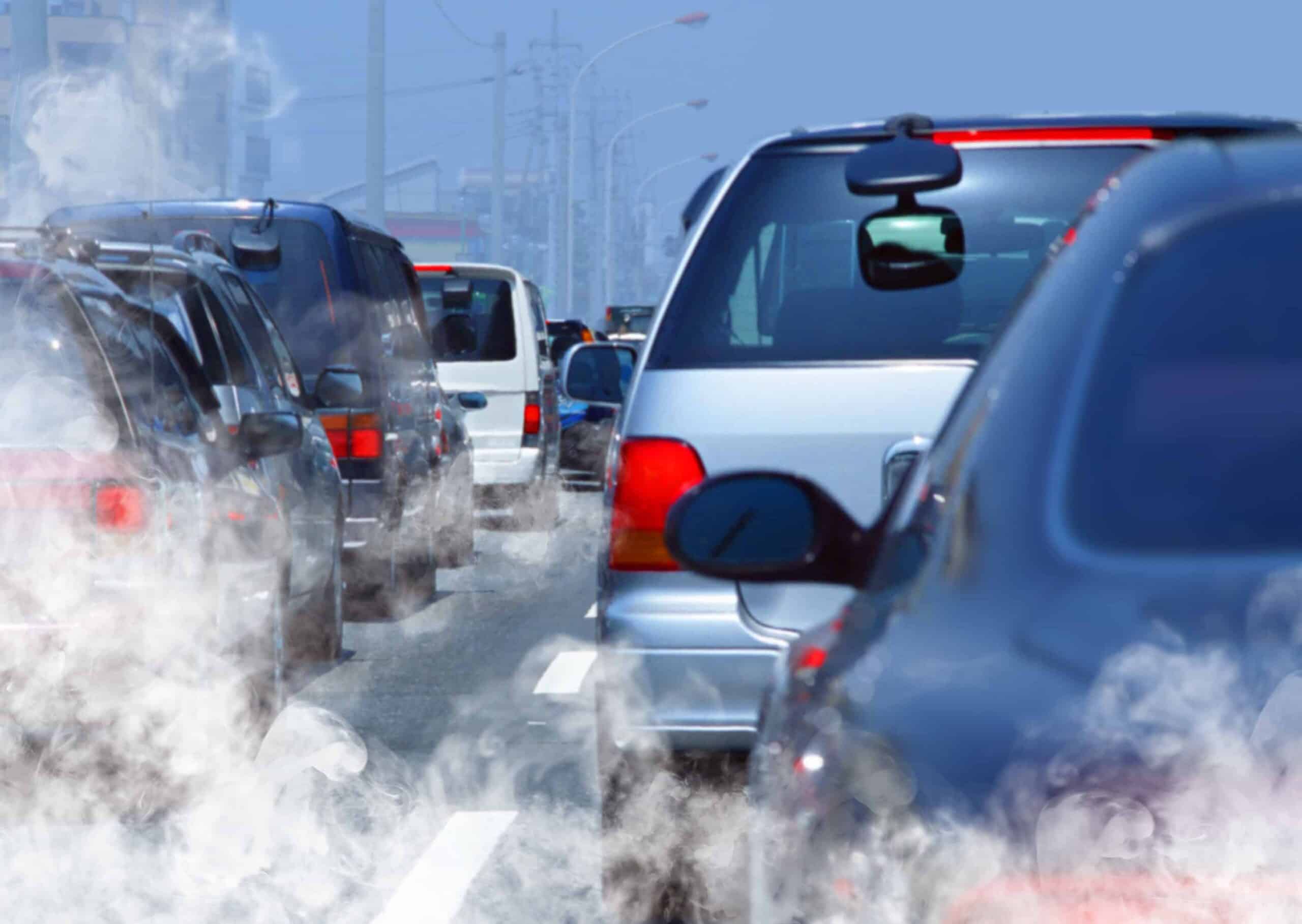
In this editorial, I focus on particulate matter, commonly referred to as PM. Particulate matter is a mixture of solid particles and liquid droplets, much of it produced by vehicle exhaust and other combustion sources. These particles range widely in size. Larger particles are heavy enough to fall out of the air within seconds or minutes and deposit on surfaces or in the upper airways. Smaller particles, including PM2.5 and ultrafine particles (<2.5), can remain suspended for hours or days and travel long distances.
Most people think of air pollution only when it is visible, as haze or smog on certain days. But particulate matter is present even when the air appears clear. It settles on cars and sidewalks, and more importantly, it is inhaled continuously. Exposure is not occasional. It is daily, and for many people, unavoidable.
Because this exposure is constant and its effects are not immediately obvious, PM is often dismissed as background noise. Yet decades of research have established its role in heart and lung disease (see review Hamanaka & Mutlu, 2018). Only more recently has attention turned to its possible effects on other conditions (see review Brockmeyer & D’Angiulli, 2016).
A growing number of studies from different countries now show associations between air pollution exposure and increased likelihood of increased brain-related disorders such as autism, Alzheimer’s disease, and dementia, particularly when exposure occurs before birth or early in life. From an ARI perspective, this trajectory is familiar. Initial observations raise concerns. Early studies provide signals. Over time, evidence accumulates across disciplines. That is exactly what has happened with particulate matter.
How PM enters the body
Two factors are especially important: particle size and toxicity. Particle size affects how easily particulate matter enters the body and reaches organs such as the lungs, cardiovascular system, and brain. Toxicity depends on chemical composition, and particles of the same size can produce very different immune and long-term biological effects. Ultrafine particles, produced largely by vehicle exhaust, particularly diesel emissions, are generally the most chemically reactive and inflammatory. Larger particles from sources such as wildfires and industrial emissions are typically less reactive but can still be harmful with chronic exposure.
Several studies have examined how fine particulate matter may affect the central nervous system (Ishihara et a., 2025). Although air pollution has long been associated with respiratory and cardiovascular conditions, increasing attention is now being directed toward its potential neurological effects. Toxic components such as metals, microplastics, and organic compounds can, under certain conditions, move beyond the lungs and enter systemic circulation. Ultrafine particles may also reach the brain directly through the olfactory pathway or indirectly by influencing the integrity of the blood-brain barrier.
Experimental and epidemiological findings suggest that chronic exposure is associated with neuroinflammation, oxidative stress, and altered neural function. Over time, these biological responses have been linked in population studies to a higher likelihood of neurological conditions, including autism, Alzheimer’s disease, and dementia. Clarifying the specific biological pathways involved remains essential for understanding how environmental exposures may influence brain development and long-term neurological health.
Particulate matter is often treated as a single exposure, but it is not. The same PM level can reflect very different mixtures depending on the source, such as traffic, wildfire smoke, industrial combustion, or even suspended dust. These differences matter because chemical composition strongly influences biological impact. Combustion-related and ultrafine particles are generally more chemically reactive, more inflammatory, and more likely to carry toxic compounds on their surfaces.
Over the past decade, gene expression profiling studies have helped clarify how PM affects biological systems. Despite differences in exposure conditions and PM sources, studies consistently report alterations in pathways involved in detoxification, inflammation, and oxidative stress. Findings from both animal and human exposure studies show similar patterns (Huang, 2013). Together, this evidence indicates that PM exposure can trigger coordinated changes in gene expression that influence immune and metabolic pathways.
PM and autism
Reports of altered detoxification pathways, chronic inflammation, and oxidative stress are not new to autism research. For decades, ARI has monitored patterns of immune activation and metabolic imbalance as a recurring theme. What is emerging more clearly now is the recognition that common environmental exposures may interact with these biological systems during critical windows of development, potentially amplifying underlying vulnerabilities (Ishihara et al., 2025; Jung et al., 2024; Wang et al., 2024).
In recent years, numerous studies have linked exposure to air pollution with an increased likelihood of autism. These associations have been reported across multiple regions, including Asia (Chen et al., 2018; Li et al., 2026), Europe (Flanagan et al., 2023; Jin et al., 2024), and North America (Cloutier et al., 2025; Volk et al., 2013). Most of this research has focused on PM2.5 and other common traffic-related pollutants. As expected in complex human studies, results vary across populations and methodologies, but the overall pattern of findings points in a consistent direction.
As the research has matured, investigators have begun asking more refined questions. Does particle size matter? Are smaller particles more biologically active? Are there specific windows of vulnerability? Recent work, including analyses from the Childhood Autism Risk from Genetics and the Environment study, suggests that exposure to ultrafine particles during early childhood may be particularly relevant (Goodrich et al., 2024).
This shift toward greater precision mirrors the broader evolution of autism research. Early work identifies associations. Later work clarifies timing, mechanisms, and susceptibility. ARI has encouraged this kind of careful progression from the beginning.
How to prepare for PM exposure in early life
Just as pregnant women are advised to avoid alcohol, cigarette smoke, pumping gasoline into their cars, and other toxic exposures, future public health recommendations may also include guidance related to air pollution. Such recommendations, potentially informed by statistical models, could take into account factors such as proximity to major roads or highways, distance from heavy traffic, and even temperature, since particulate matter can remain suspended in the air longer during warmer conditions (Leffel et al., 2025).
For individuals who live in or spend substantial time in high PM environments, protective strategies may begin as early as preconception and continue through pregnancy and early childhood. These strategies could include using air purifiers in the home and workplace, wearing masks outdoors when pollution levels are elevated, and taking additional precautions to reduce exposure during a child’s early years. Other approaches may involve targeted nutritional supplementation aimed at supporting cellular resilience and detoxification pathways.
As discussed in a previous editorial, the P2i program offers a comprehensive training framework for healthcare providers and families preparing for pregnancy or welcoming a new child, with the goal of reducing overall toxic burden. (See www.forump2i.com.)
Continuing ARI’s legacy of careful, pattern-based inquiry
As always, caution is essential. None of the conditions discussed above are caused by any single mechanism. Autism is certainly not caused by any single factor. Many autistic people are happy being autistic and see autism as part of neurodiversity, meaning all brains are different. Genetics, immune function, metabolism, and environment all play roles. The current research does not suggest that particulate matter causes autism. What it does show is biological plausibility of how pollution is impacting human experience.
ARI has long emphasized that progress in autism research comes from recognizing patterns early and evaluating them carefully over time. The growing evidence linking particulate matter to neurodevelopmental vulnerability fits this pattern. These exposures are widespread, largely invisible, and part of daily life.
As research advances, the most important questions may shift. Rather than asking whether particulate matter matters at all, the focus may need to move to when it matters most, how it interacts with underlying biology, and which individuals are most vulnerable. These differences likely reflect epigenetic and biological variability, since not everyone exposed to particulate matter experiences adverse effects. Addressing these questions aligns closely with ARI’s longstanding mission to integrate research, clinical insight, and real-world relevance.
This editorial is available in PDF format – Download Here
References are available at www.ARRIReferences.org.
This article originally appeared in Autism Research Review International, Vol. 40, No. 1, 2026
Editorial: What we breathe matters – Rethinking air pollution and autism
For nearly sixty years, the Autism Research Institute (ARI) has tried to understand autism by looking beyond surface behaviors and asking deeper biological questions. From the beginning, Bernard Rimland challenged the dominant

Editorial: Invisible threats – the role of environmental toxins in autism
As our knowledge about autism continues to evolve, so does our understanding of its root causes. For many years, professionals blamed “refrigerator parents” and prescribed psychoanalytic therapy. Once the psychogenic theory was

ARI’s 2025 Impact
Advocating for Independent Research and Education For nearly six decades, ARI has funded groundbreaking research, expanded educational initiatives, and brought clinicians and scientists together worldwide. Yet researchers and clinicians continue to face unprecedented