

Adults with autism exhibit less activity in a specific brain region during eye contact than neurotypical adults do, according to a new study. Joy Hirsch and colleagues used a noninvasive neuroimaging method called functional near-infrared spectroscopy to analyze the brain activity of pairs of adults, each including one participant with ASD and one neurotypical participant, during brief social interactions involving eye-to-eye contact. Overall, 17 adults and 19 neurotypical controls participated in the study.

The researchers found that when making eye contact, participants with ASD exhibited significantly reduced activity in a brain region called the dorsal parietal cortex compared to neurotypical controls. The more pronounced the overall social symptoms of ASD were, the less activity was seen in this brain region. Neural activity in this region was synchronous between neurotypical participants during eye-to-eye contact; however, this increase in neural coupling was not observed in ASD.
The researchers conclude, “The findings indicate that as categorized social ability decreases, neural responses to real eye contact in the right dorsal parietal region also decrease consistently with a neural correlate for social characteristics in ASD.”
—
“Neural correlates of eye contact and social function in autism spectrum disorder,” Joy Hirsch, Xian Zhang, J. Adam Noah, Swethasri Dravida, Adam Naples, Mark Tiede, and Julie M. Wolf, PLOS ONE, November 9, 2022 (free online). Address. Joy Hirsch, [email protected].
—and—
“Autism research: understanding reluctance to make eye contact with others,” news release, Yale University, November 9, 2022.
This article originally appeared in Autism Research Review International, Vol. 36, No. 4, 2022

Editorial: What we breathe matters – Rethinking air pollution and autism
For nearly sixty years, the Autism Research Institute (ARI) has tried to understand autism by looking beyond surface behaviors and asking deeper biological questions. From the beginning, Bernard Rimland challenged the dominant
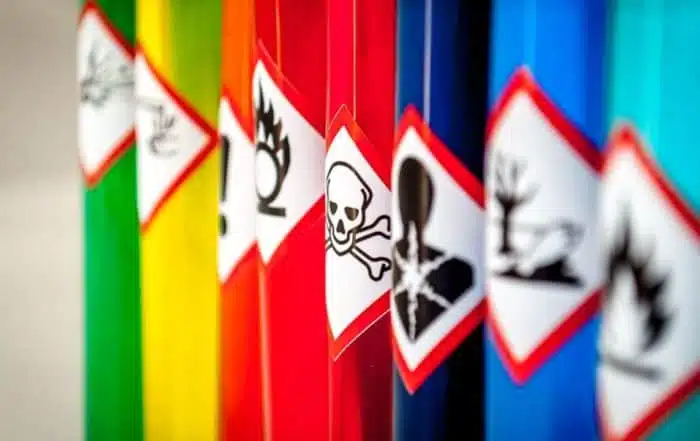
Editorial: Invisible threats – the role of environmental toxins in autism
As our knowledge about autism continues to evolve, so does our understanding of its root causes. For many years, professionals blamed “refrigerator parents” and prescribed psychoanalytic therapy. Once the psychogenic theory was
ARI’s 2025 Impact
Advocating for Independent Research and Education For nearly six decades, ARI has funded groundbreaking research, expanded educational initiatives, and brought clinicians and scientists together worldwide. Yet researchers and clinicians continue to face unprecedented