
The amygdala—a region of the brain that helps to interpret the social and emotional meaning of sensory input—grows abnormally rapidly in young infants who later develop autism, according to recent research.
Mark Shen and colleagues used magnetic resonance imaging (MRI) to study amygdala development in 408 infants. The group included 58 children who were at elevated risk for ASD (because they had an older sibling with ASD) and later developed autism; 212 at-risk infants who did not develop autism; 109 neurotypical controls; and 29 infants with fragile X syndrome (a hereditary condition that causes many symptoms similar to those of ASD). The researchers obtained more than 1,000 MRI scans of the children at 6, 12, and 24 months of age.
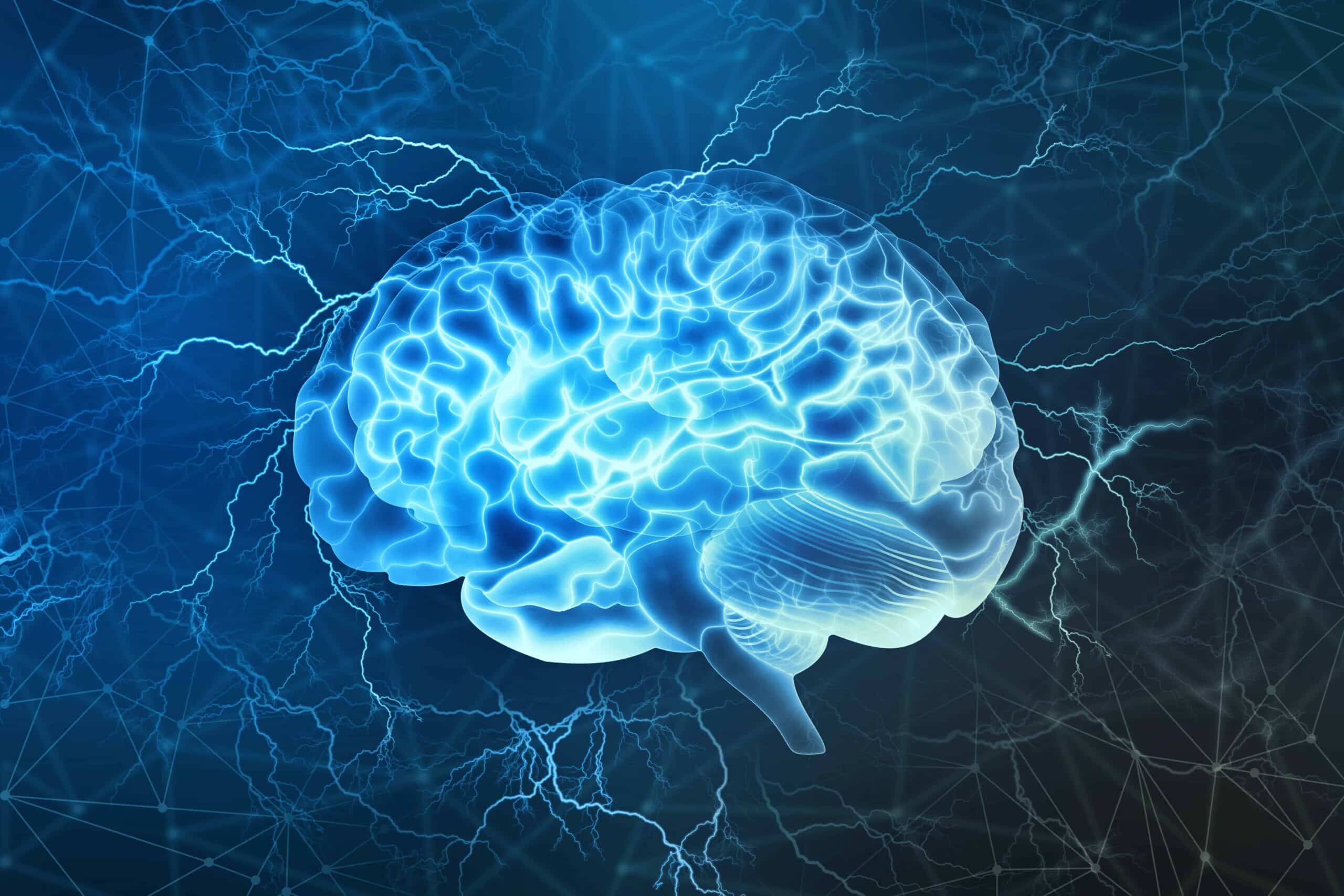
They report, “Infants who developed ASD had typically sized amygdala volumes at 6 months, but exhibited significantly faster amygdala growth between 6 and 24 months, such that by 12 months the ASD group had significantly larger amygdala volume… compared with all other groups.” In addition, they say, “Amygdala growth rate between 6 and 12 months was significantly associated with greater social deficits at 24 months when the infants were diagnosed with ASD.”
Noting that very young infants who later develop ASD exhibit abnormal visual processing and other sensory anomalies, the researchers theorize that this could place increased stress on the amygdala, leading to overgrowth. Another possibility, they say, is that amygdala overgrowth is related to neuroinflammation occurring in infancy.
Senior study author Joseph Piven adds, “Our research suggests an optimal time to start interventions and support children who are at highest likelihood of developing autism may be during the first year of life. The focus of a pre-symptomatic intervention might be to improve visual and other sensory processing in babies before social symptoms even appear.”
—
“Subcortical brain development in autism and fragile X syndrome: evidence for dynamic, age- and disorder-specific trajectories in infancy,” Mark D. Shen, Meghan R. Swanson, Jason J. Wolff, Jed T. Elison., Jessica B. Girault, Sun Hyung Kim, Rachel G. Smith, Michael M. Graves, Leigh Anne H. Weisenfeld, Lisa Flake, Leigh MacIntyre, Julia L. Gross, Catherine A. Burrows, Vladimir S. Fonov, D. Louis Collins, Alan C. Evans, Guido Gerig, Robert C. McKinstry, Juhi Pandey, Tanya St. John, Lonnie Zwaigenbaum, Annette M. Estes, Stephen R. Dager, Robert T. Schultz, Martin A. Styner, Kelly N. Botteron, Heather C. Hazlett, and Joseph Piven, American Journal of Psychiatry, March 2022 (online). Address: Mark Shen, [email protected].
—and—
“Scientists identify overgrowth of key brain structure in babies who later develop autism,” news release, University of North Carolina Health Care, March 25, 2022.
This article originally appeared in Autism Research Review International, Vol. 36, No. 2, 2022

Editorial: What we breathe matters – Rethinking air pollution and autism
For nearly sixty years, the Autism Research Institute (ARI) has tried to understand autism by looking beyond surface behaviors and asking deeper biological questions. From the beginning, Bernard Rimland challenged the dominant

Editorial: Invisible threats – the role of environmental toxins in autism
As our knowledge about autism continues to evolve, so does our understanding of its root causes. For many years, professionals blamed “refrigerator parents” and prescribed psychoanalytic therapy. Once the psychogenic theory was
ARI’s 2025 Impact
Advocating for Independent Research and Education For nearly six decades, ARI has funded groundbreaking research, expanded educational initiatives, and brought clinicians and scientists together worldwide. Yet researchers and clinicians continue to face unprecedented