A brief history of peer support
Peer mentorship, though not referred to as such, has been used as a framework for enhancing classroom learning and student social experiences for many years. Throughout research literature, peer-based methods include cooperative learning, inclusive/inclusion classrooms, peer arrangements, and peer-mediated supports. Modern peer support programs are based on cooperative learning techniques, first published in the early 1990s. Most programs involve an allistic (non-autistic) peer who provides social and/or academic support to students with autism or other disabilities (Brock et al., 2017). Cooperative and inclusion learning studies show decreases in disruptive behavior and increases in reading skills, academic engagement, and peer interaction (Koegel et al., 1995; Kamps et al., 1994; Dugan et al., 1995; McCurdy & Cole, 2013). Many studies also show that mentees and mentors acquire targeted academic and social skills and build on and apply them across situations and groups (Hunt et al., 1994; Christensen et al., 2004; Carter et al., 2005).
Modern peer support programs are highly modifiable and can be woven into various care strategies and goals across ages, locations, and activities (Brock & Huber, 2017). Simpson and Bui recently implemented a peer-based reading buddy strategy to increase social interaction among autistic children (2024). Another study using partner-focused conversation skills revealed increased pragmatic language efficiency for autistic youth, and all students (both autistic and allistic) reported that the program was beneficial (Bambara et al., 2021). Further, peer-based interventions implemented in a three-year adventure therapy program and group for individuals experiencing gender discomfort/dysphoria saw increased social skills and comfort and positive psychological results with potential for long-term impact (Karoff et al., 2017; Brandsma et al., 2022).
Instances of peer support in autism
School-based peer support
Systematic reviews of peer-intervention programs show improvements in social interactions, academic engagement, and quality of friendships in autistic high school students and their allistic peers (Carter et al., 2016; Asmus et al., 2016). Research also suggests that communication skills gained via peer support relationships can be generalized to other settings (Belchic & Harris, 2008). In a recent study on student and teacher perspectives of peer support programs, respondents said that the programs help autistic youth to better understand their identity as students, peers, and learners. Students felt more empowered to set and achieve goals for their future, and teachers observed increased self-confidence and assertiveness in their pupils (Kiblen et al., 2024).
Peer-based support programs are highly effective methods of care and development support for autistic children and youth. Successful peer support techniques present a framework for creating and maintaining an atmosphere of mutual respect, acceptance, and support, which naturally reinforces mental health, social development, and quality of life for all involved (Carter et al., 2010; Sun et al., 2020; Sandstrom et al., 2014; Mazurek, 2013; Cooper et al., 2023).
University-based support
Increasing numbers of people with autism and other disabilities are attending higher education, and many universities have employed peer-support programs to assist these students. Mentorship programs for autistic adults entering universities have seen positive outcomes in social skills, academic success, and sense of belonging (Duerksen et al., 2021; Siew et al., 2017).
Although results are generally positive, researchers assert that the field of university peer support in autism is still in its infancy (Duerksen et al., 2021). Peer-based strategies serve as a fantastic blueprint for further acceptance and integration of people with disabilities who would likely have been institutionalized for their differences just two decades ago. Support for these programs stems from an increased understanding of autism in the wider community.
Learn more about transitioning to adulthood with autism in our free webinars Transition to Adulthood, presented by Dr. Stephen Shore
and
Examining the Transition to Adulthood in Autism: Challenges and Opportunities in the Aim of Thriving, presented by David B. Nicholas, Ph.D.
Peer support in adulthood
Until relatively recently, autism was understood strictly as a childhood condition. Although today we know that autism is experienced across the lifetime, there remains a significant lack of research and care for autistic adults and older adults. Beyond university settings, few peer-based strategies for adults on the spectrum exist, but those that do suggest similar outcomes to classroom-based peer supports.
Work and professional arrangements
In a qualitative study on post-diagnostic support, autistic adults highlighted a mismatch in support needed and provided. They underscore the need for community connection and flexible, personalized strategies and suggest peer-support programs as a potential avenue of success (Crompton et al., 2022). Stakeholders (participants, parents, peer mentors, and employers) from a peer-based work preparation program in Canada reported decreased concern over job qualification and attainment following the program (Nichols et al., 2019). Another recent study assessed a peer-mediated intervention in a work-based learning setting for transition-age autistic students. Results showed increased social, vocational, and independent interaction skills for all three students (Athamana & Chushing, 2019).
In recent years, large IT companies have started actively seeking autistic individuals for employment because they know that some people with autism can contribute to the company at levels that nobody else can. They have also realized that those with these specific abilities often have challenges, social or otherwise, that must be supported for their employees to be successful. Today, companies like Microsoft, SAP (Systems Applications and Products in Data Processing), Apple, Google, and others offer peer-based programs specifically for autistic people.
Employee peer supports in the IT industry
In 2015, Dr. Stephen Shore and Dr. Robert Naseef worked with a group of organizations, including SAP and The ARC in Philadelphia, to identify twenty-five young autistic adults interested in the IT sector and provide them with a 40-hour soft skills training course. SAP expected to hire around half of the participants but ended up hiring everyone. Of the twenty-five young adults who took Dr. Shore’s Soft Skills course, twenty-four are still working with SAP (one person moved across the country and changed jobs).
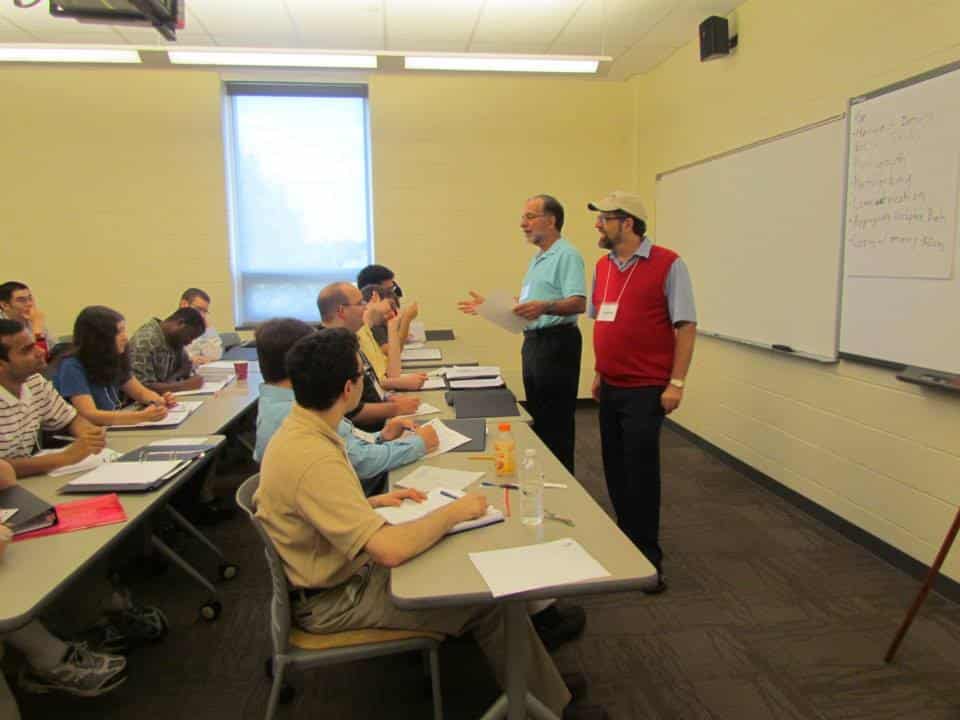
(Photo taken from SpArc Philidelphia Facebook Page)
Beyond work preparation and soft skills training, the SAP Autism at Work Program offers peer support to employees via an Autism at Work buddy, mentor, and coach provided to new hires. The program is “aimed at creating a more inclusive and supportive work environment that leverages the unique strengths and perspectives of autistic individuals by fostering inclusion, maximizing potential, providing support, raising awareness, and improving retention. [SAP’s] goal is to support and empower employees by creating an environment where everyone can thrive.”
Other IT organizations with similar programs for autistic and neurodiverse workers include Willis Towers Watson (WTW) and Earnest and Young (EY), who have established Neurodiversity Centers of Inclusion across the UK, US, and Canada.
While initial findings show promise, peer support programs remain a severely undeveloped pathway for generating employment opportunities for autistic adults. Studies show that employers must gain a greater understanding of the heterogeneity of autism and commit to inclusive/flexible environments and hiring processes for workplace peer support to function (Nichols et al., 2019; Bury et al., 2020). In the United Kingdom, The National Health Service (NHS) recently implemented The Autism Peer Support Worker Capability Framework, which develops paid roles for autistic people to support others with autism based on their lived experiences. The program also provides peer support for caregivers, highlighting the importance of connecting to individuals with similar lived experiences. Supportive evidence for applying peer support in the workplace is robust and asserts that all participants (mentees, mentors, employers) require education and training around work experiences and accommodations. Outside of the tech industry, there remains a need for acceptance and appreciation of autistic people and the talents they bring to an organization. It is high time we begin addressing the issue of employment in autism more intently, and peer support modalities seem a good place to start (Shea et al., 2024; Nichols et al., 2019; Bury et al., 2020).
Peer support in older adulthood
Self-reports from autistic adults show that autism does not negatively affect aging, but a lack of understanding and proper care greatly hinder quality of life (QoL) (Hwang et al., 2017). In the allistic population, peer support has yielded positive results for social, emotional, and mental well-being for low-income older adults and those living alone or in assisted living facilities (Geffen et al., 2019; Kim, 2012; Tomasino et al., 2017). No studies on peer support for autistic older adults have been published. However, peer support initiatives for mental health and early-onset dementia show positive changes in QoL (Chapin et al., 2013; Sullivan et al., 2022). Given the co-occurrence of mental health difficulties and dementia in autism, these findings suggest that modification of peer support for older autistic adults is not only possible but urgently necessary.
Parental perspectives
Megan O’Connor and Steve Gauin emphasize their joy in seeing Nick gain his independence through the Options Program at Bishop Hendricken High School. The peer arrangements gradually minimize parental interaction and ensure participating students collaborate with multiple mentors every day. His parents feel that they can trust Nick is cared for and supported at the school, allowing them more time to focus on work and home life.
“It’s really touching and inspiring to see him to go to school for an event, see him walk down the hall and every person, every student, every teacher, is saying, Hi, giving them a high five. You know, it’s priceless.”
— Steven Gaurin, Parent, Scientist, Advocate (Interview Sept 2024)
A 2023 study on parental perspectives of the effect of peer support on their children’s mental health found that 33% of the 985 parent participants definitely favored peer support, especially Latinx parents. These findings bolster the sentiments of discussed lived experiences and also present peer support as an innovative approach to mental health disparities (Sekhar et al., 2023).
Intervention participation
Most peer support initiatives do not require parental involvement as they are applied in classroom or therapy settings (Falkmer et al., 2015). However, in the Program for the Education and Enrichment of Relational Skills (PEERS), parents/caretakers attend a class where they learn how to assist adolescents in making and keeping friends. Simultaneously, children attend a class using didactic lessons, role-play demonstrations, and socialization activities to learn and practice social skills. Thus, PEERS programs offer support at the family level, ensuring personal empowerment and social skills continue to evolve (Mandelberg et al., 2013). Parent/caregiver participants report improvements in family chaos and self-advocacy with potential long-term impact following PEERS training (Karst et al., 2015; Tripathi et al., 2022).
It is clear that parent involvement in peer support strategies directly impacts intervention success. However, participation also requires significant adaption from parents, who often manage the needs of more than one child on top of their own (Tripathi et al., 2022; Estes et al., 2017). A 2017 study found that caregiver burden had a negative relationship with quality of life and that social support mediated that negative relationship (Marsack & Samuel, 2017). Further investigation shows that both received and perceived social support are significantly related to parental stress, suggesting that perceived social support may be an underutilized aspect of care (Robinson & Wess, 2020).
Learn more about the UCLA PEERS program in The Science of Making Friends for Autistic Youth: Lessons from the UCLA PEERS Program, presented by Dr. Elizabeth Laugeson.
Support for siblings of autistic children
Siblings play an essential role in shaping one another’s development trajectories and so are a critical aspect of lifelong support for many autistic individuals. In many cases, having siblings is a protective factor as both younger and older siblings have been associated with stronger socialization, communication, and daily living skills in many people with autism (Kryzak et al., 2014; Ben-Itzchack et al., 2019; Brewton et al., 2012; Daughrity, 2018). It is essential to understand that siblings of autistic individuals (SibASD) have their own needs and experiences, which are inherently impacted by care routines for their autistic siblings (Kryzak et al., 2014; Ferraioli et al., 2012). A recent scoping review found that SibASD experience lower psychological well-being, less perceived social support, increased aggressiveness, and higher levels of anxiety and stress compared to siblings of allistic individuals (Quatrosi et al., 2022).
Research suggests that including SibASD in behavioral interventions benefits both children and is associated with skill generalization in autistic siblings (Ferraioli et al., 2012; Lu et al., 2021). In many cases, siblings provide a built-in communication partner, living skills role model, and social companion who can help teach them how to live happy and healthy lives (Rosen et al., 2023). In most sibling peer support strategies, SibASDs implement care techniques via play and other interactions after specific training (Bass& Mulick, 2007; Lut et al., 2021). For example, one community care program encompassed a SibASD support group, care skills training, and inclusive recreation time. Results showed decreases in stress, anxiety, and depression, as well as increases in social networks for allistic siblings, growth in reciprocal interactions, and overall program acceptance from parents (Kryzak et al., 2014).
Sibling peer support programs assessed to date show positive social validity of program appropriateness, acceptance, and satisfaction (Kryzak et al., 2014; Lu et al., 2021). Researchers assert the need to observe and document the nature and extent of siblings’ shared activities, how individual adjustments affect relationship qualities over time, and the importance of context for promoting positive interactions. For example, researchers have found that sibling interactions are more reciprocal during recreation and hierarchical during care administration and that rewarding behaviors may be more effective in the presence of parents/adult caregivers (McHale et al., 2015).
Parent and caregiver peer supports
Parents of autistic children often experience increased stressors due to a lack of support and demands of caregiving. Recently, parent-peer support has emerged as a critical aspect of autism care, especially for families in low-resource settings (Lee et al., 2023; Sartore et al., 2021). Parents have reported that peer-to-peer supports catalyze learning, encouragement, support, and more balanced friendships for themselves and their autistic children (Shilling et al., 2014; Bray et al., 2017; Daughrity, 2018). Current research underscores the value of learning and discussing with people who have shared similar experiences and the direct impact that such relationships can have on anxiety and stress associated with caregiving (McCabe, 2008; Sharma et al., 2022; Catalano et al., 2018). For example, Parents Taking Action is a peer-led educational and community-based program for parents/caregivers of autistic children that has seen auspicious results (Dababnha et al., 2021). The program has been successfully adapted for Black parents, Chinese immigrant parents, Latinx parents, and Diné (Navajo) parents of young children with autism/intellectual disabilities in cities across the U.S. (Magaña et al., 2017; 2021; Lindly et al., 2023). Participants and researchers attribute the success of these programs to collaborative creation and the subsequent adaptability of the initiatives (Magaña et al., 2021; Dababnah et al., 2021).
Many parent support programs have also been adapted for online use, significantly increasing accessibility. Internet-based peer support initiatives in the allistic population reveal promising results for parental support, information sharing, and community building (Niela-Vilén et al., 2014). Hermaszewska and Sin recently published potential strategies for content and implementation of an online peer-led intervention for parents of autistic children. Parent focus groups underscored the need for multicomponent online strategies that combine psychoeducation with peer support and access to healthcare professionals (2021). This combination balances expert and parental advice and ensures program malleability to individual needs, which is critical for program success (Clifford & Minnes, 2013; Sin et al., 2018; Hemdi & Daley, 2017; Catalano et al., 2018; Hermaszewska et al., 2021).
Learn about self-care strategies in our free webinar, Parents and Caregivers: The Importance of Self-Care, presented by Amanda Tami, LPC, BCBA.
Families United in Newtown - Community Connection
Other forms of parental support can include community-based events. Families United in Newtown (FUN) is a non-profit that fosters community by providing social opportunities for individuals with special needs and their families. During monthly FUN activities, children are paired with a mentor for the evening while the parents can relax and mingle with peers.
“It gives [parents] a free space. They don’t have to pay to come and bring their kids to a safe environment. Safety is my number one most important thing. The parents can sit back and just watch.”
— Linda Jones, LMFT, MS, RD, Parent, Clinician, FUN Founder and President (Interview, Sept 2024)
FUN was created by Linda Jones, mother of two children with autism. From the time they were diagnosed, Linda and her husband understood the importance of ensuring their children interacted with other kids in the community to gain skills and learn how to navigate life. In September 2009, their son Tyler suddenly passed away in his sleep. Inspired by all that Tyler was, Linda and other families in their community decided to create a space for families of children with special needs to gather and have fun.
The first FUN activity was a collaboration with National Honor Society students as mentors for participating children. For nearly 15 years, FUN has served hundreds of families, creating spaces for acceptance and celebration in their Connecticut community. Today, any high school students interested in mentoring can volunteer to help with putting on FUN events. FUN founder Linda Jones views peer mentorship as a critical aspect of what the program offers. Not only are they providing an activity, snacks, and space to hang out, but they are also fostering interaction across social groups that would otherwise remain separate.
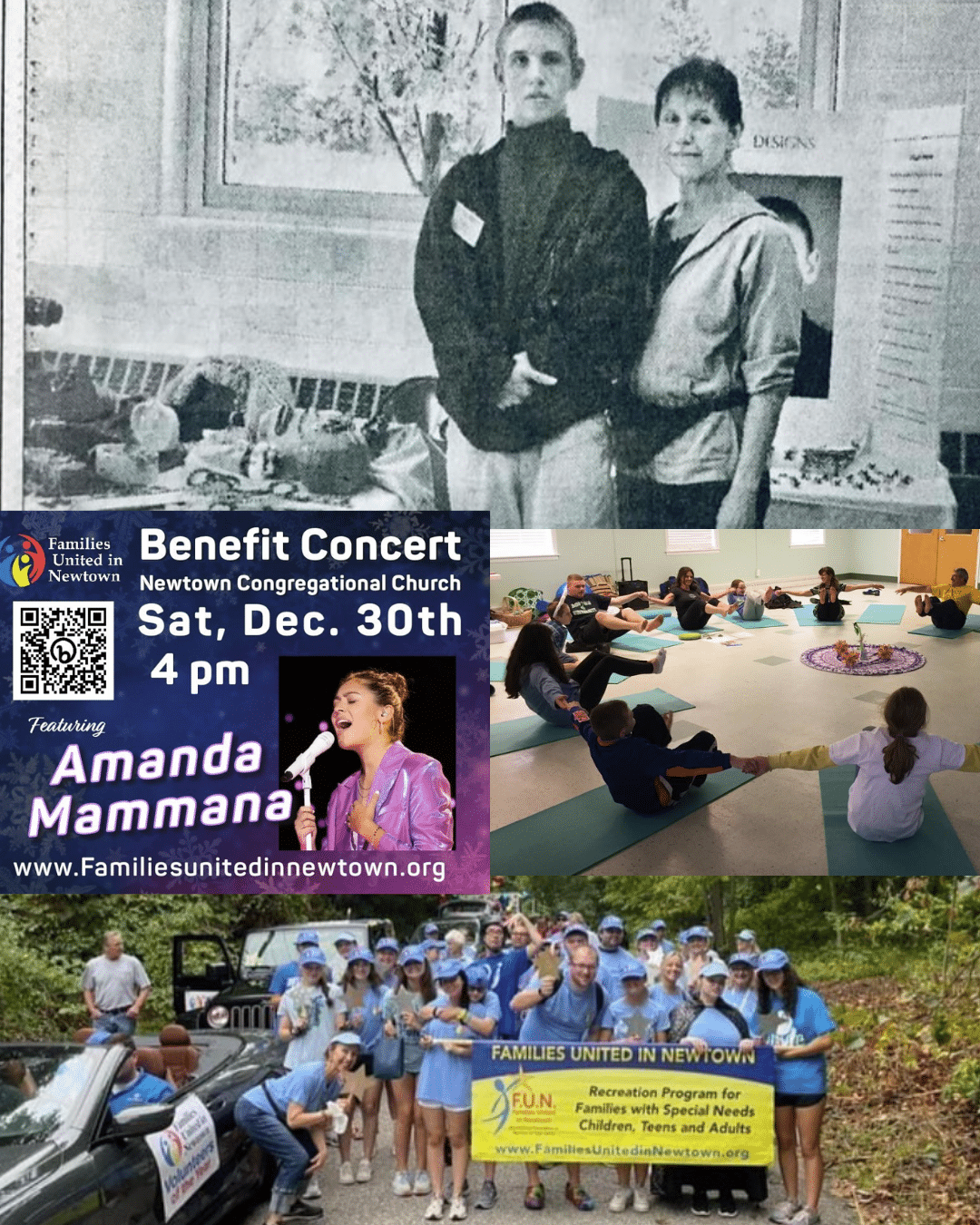
Photos taken from Families United in Newtown Instagram accounts.
Mechanisms of success
Peer support initiatives are highly modifiable to individual and location, allowing for a variety of implementation strategies. Successful peer mentorship programs are created in collaboration with those involved, ensuring some degree of universal design. They also feature social interactions that are simultaneously fun and educational, fostering individual expression and group cohesion.
Universal Design
Effective peer arrangements generally include education and support for academic/work success and social skills/comfort built into some degree of Universal Design for Learning (UDL). The Universal Design Handbook lists the principles of UDL as Equitable Use, Flexibility in Use, Simple and Intuitive Use, Perceptible Information, Tolerance for Error, Low Physical Effort, and Size and Space for Approach and Use. These principles should be applied to architecture, products, and software (Preiser & Smith, 2011). Dr. Shore describes UDL tactics he uses in university settings, like presenting information in multiple mediums (e.g., visual, auditory, tactile) and giving students more autonomy in coursework and planning (Grogan, 2015). Similarly, a college assistance program at California State University, Fullerton, has made its peer-support program available online, significantly increasing accessibility to services (Cote et al., 2020; Cresswell et al., 2019).
Equality, Equity & Universal Design
Dr. Shore describes UDL in the context of equality and equity, highlighting that UDL focuses on designing for everyone’s needs instead of adding accommodations to systems created for a specific kind of person. He describes a common meme that depicts a tall, medium, and short person trying to watch a baseball game over a fence. In the first photo, all three people are standing on a box so that the tall and medium build person can see while the small person cannot – this represents equality, where everyone is treated the same. In the second photo, which represents equity, each person receives the number of boxes they need – the tall person has none, the middle person has one, and the shorter person has two, so all of them can see the game. Dr. Shore then describes a third photo where the wooden fence has been replaced with a chain-linked one so everyone can see through it. This, he continues, is the concept of universal design – where nobody needs accommodations because the curriculum, environment, or job is designed for everyone’s capabilities.
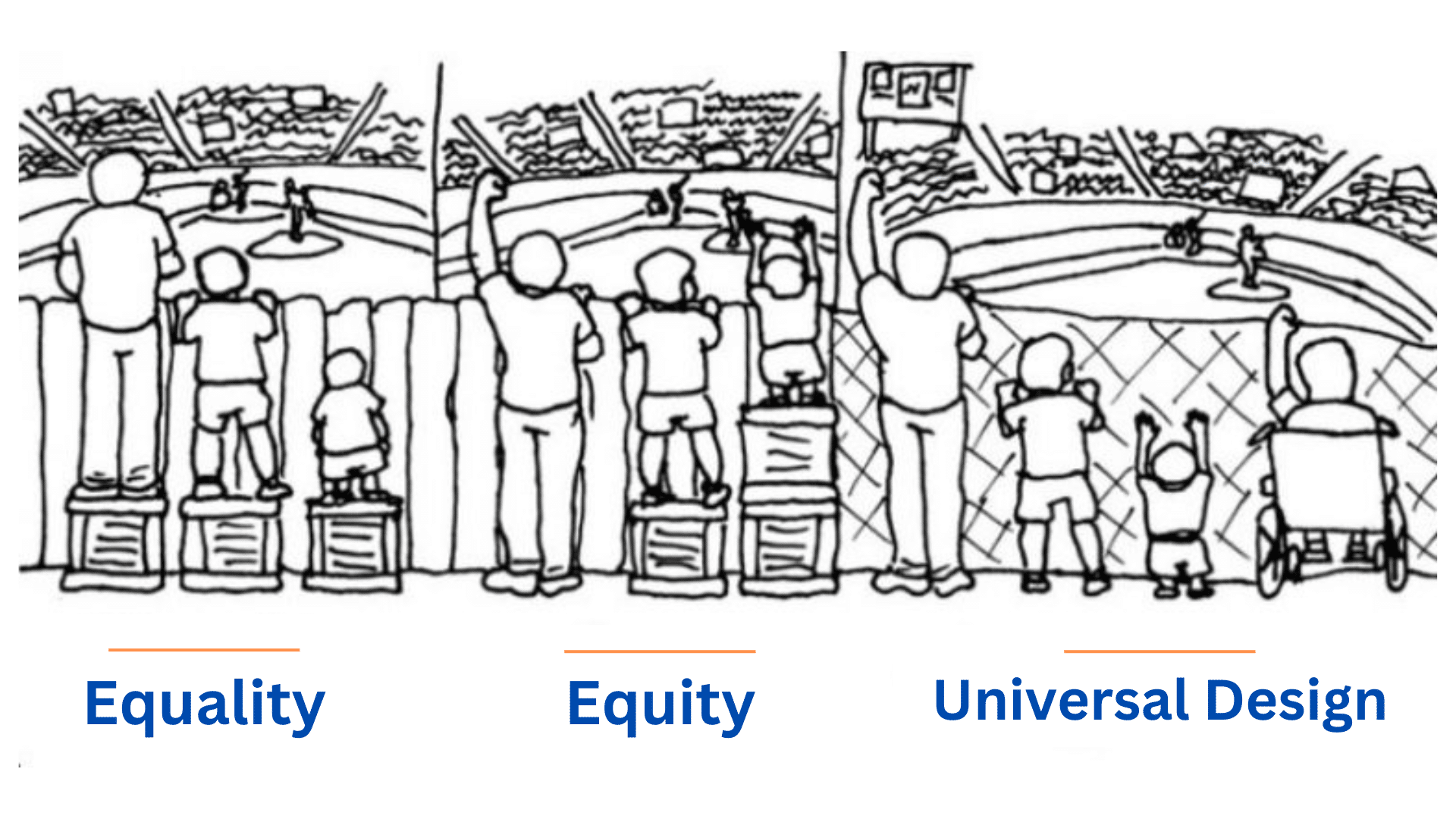
The benefits of UDL are not reserved for neurodiverse and disabled people. In most cases, when UDL is employed, an environment, curriculum, or intervention becomes more accessible and accommodating for everyone. Many neurotypical people also have preferences and needs that they may try to hide or not call attention to. So, using UDL as a basis for an intervention or activity promotes the success and well-being of all people (Atherton Interview, 2024; American University of Washington, 2023).
“This is just good design in general… as we start to focus more on accessibility, we can also realize that that’s not just benefiting people who are neurodivergent or have physical differences. It’s just better for everyone. And if we start with neurodiversity and work our way backwards, then we’re just creating a better version of whatever we are trying to do.”
— Dr. Gray Atherton, Researcher and Lecturer, University of Plymouth (Interview, Sept 2024)
Participatory methodologies
Social support models, or frameworks that utilize socialization for well-being and acceptance, have emerged as critical aspects of successful peer arrangements along with peer-mediated communication (Kapp, 2018; Chan et al., 2009; Chapin et al., 2018). Specifically, friendship groups, augmentative and alternative communication (AAC), and interest-driven play are associated with positive communication outcomes (Chapin et al., 2018). A recent co-designed online peer support program saw autistic young adults gain practical skills and social connections while empowering communication and collaboration (Davies et al., 2024). Autism-specific peer supports are generally well-received by autistic young adults. However, participants and researchers assert the need for careful design, training, and awareness efforts around the rights, needs, and preferences of each autistic person (Crompton et al., 2022; Magaña et al., 2021; Dababnah et al., 2021).
As with any intervention method or measurement tool, peer-support strategies for autistic people must be developed based on input from the autism community. Community participation is paramount to creating effective care strategies, and over the last few decades, participatory research and tool development has become the standard. Excluding the voices and perspectives of target audiences breeds discontent and maintains a feeling of “othering” where connection and acceptance should be the norm.
Learn more about the importance of participatory research and care tactic creation with our free webinar, Autism Research: Nothing About Me Without Me, presented by Dr. Wenn Lawson.
Contemporary research asserts the need for peer support programs created by and for autistic individuals. However, this is not always possible, and in order to facilitate wider cultural acceptance and prejudice reduction, allistic and autistic groups must continue to share space and interact (Cross & Atherton, 2024 Interview; Valderrama et al., 2022). While empathizing with other social groups can be difficult, allistic mentors tend to have a close personal connection to autism either through a family member or through their work/study in special education, psychology, or therapy. (Cote et al., 2020; Shore interview, 2024; Duerksen et al., 2021). Mentors are self-motivated to participate and often recognize the gap in cultural understanding and acceptance of their autistic peers. For example, at Bishop Hendricken High School, Adelphi University, and CSU Fullerton, many student mentors participate in the programs year after year, citing increases in their social interactions, academic success, and feelings of belonging as reasons for participation (Carter et al., 2011; Huber & Carter, 2019; Biggs et al., 2017).
“[The mentors] are self motivated to take part in this program… driven by their own personal values and desire to help… [One of my son’s mentors] is going to become a special educator and the other young man decided he’s going to volunteer tutor throughout his college experience… and f you ask the school, they say that the peer mentor program is what really drives the school being this inclusive environment where everyone belongs.”
— Megan O’Connor, Parent, Educator, Advocate (Interview, Sept 2024)
In instances where autistic-led peer support is not possible, allistic mentors must be trained to minimize gaps in empathy and safety risks. Many school, family, and work-based peer-support models described in this article include mentor training specific to their environments (Kryzak et al., 2014; Dababnha et al., 2021; Nichols et al., 2019; LaPoint et al., 2024). Similarly, Linda Jones, founder of Families United in Newtown, has created a training program for student mentors. FUN training videos cover safety, how to mentor, the basics of autism, communication, and what it means to volunteer. After the training, students complete a quiz focused on safety and thinking from the other person’s point of view.
“What’s really essential is for them to be able to think about how others experience the world, [take on] another perspective, and that really takes a lot of practice… you know [your partner] might not talk, but they probably understand what you’re saying…”
— Linda Jones, LMFT, MS, RD, Parent, Clinician, FUN Founder and President (Interview, Sept 2024)
[Linda Jones discusses mentor trainings and the importance of trust and understanding.]
Shared tasks and gamification
Shared experiences, be it games, chores, spiritual activities, or something else, provide a central focus and structure for social interactions, which can alleviate anxiety around how one presents oneself in social situations. For example, Steve Gauin, father of Nick, who participates in the Options Program at Bishop Hendricken High School, says that social interactions centered around spirituality have helped Nick connect with school staff and build his self-confidence as he manages specific tasks related to spiritual services.
“The fact that it is a Catholic institution means there are masses, there are certain ceremonies around that theme. And Nick has gotten so much out of all that. I, myself identify as agnostic. But, you know, I approached Nick going to this school with an open mind and I think it has been a real benefit to him socially. [It’s helped] in relating to the faculty who have really gotten to know him. And also confidence wise…That’s not to say that you need to have [a religious aspect], I don’t think you do. But I wanted to point that out.”
— Steven Gaurin, Parent, Scientist, Advocate (Interview, Sept 2024)
Contemporary autism literature specifically highlights gaming as an avenue of social support. For example, Dr. Gray Atherton and Dr. Liam Cross have found that autistic people and traits are overrepresented amongst board gamers and that the most common reason that autistic people game is for socialization. Their work shows that board games create a structured outlet for building social relationships. Study participants noted that having eyes on the board instead of on each other lowers anxiety, allowing conversations to flow more easily without the stress of small talk and open-ended conversations (Cross et al., 2023; 2024; Cross & Atherton Interview, 2024). Board games are also relatively affordable, making them an accessible way of providing a naturalistic, collaborative environment that allows players to practice social skills like cooperation and social deduction (Atherton et al., 2024).
Learn more about gaming and social connections in our free webinar How Games Foster Social Connection, presented by Dr. Gray Atherton.
Read Doctors’ Atherton and Cross’s 2025 publication, Metaphors and myths: using the board game Dixit to understand the autistic lived experience, published in Discover Psychology.
Humans are an inherently social species, so shared activities like games and hobbies come naturally and are used to create and maintain connections. In many ways, shared activities can break down societal roles, allowing participants to interact on the same level, no matter their social standings or capabilities. Gamification is steadily gaining use in employment recruitment and work training for autistic and allistic people and FUN founder Linda Jones has always included crafts and board games (sometimes life-sized!) in their monthly community activities (Tan et al., 2022; Willis et al., 2021; Zlotnik et al., 2023).
Interpersonal coordination – The driving force
Social interactions and friendships are critical aspects of childhood development closely linked to academic/work success and emotional well-being across populations (Carter et al., 2010; Sun et al., 2020). Unfortunately, people with physical and intellectual differences are often restricted in their social opportunities and, therefore, are at increased risk for loneliness and associated mental health difficulties (Tought et al., 2017). As outlined throughout this piece, peer-based interventions improve social interactions, academic engagement, and friendship quality across ages and locations. Skills gained via such care strategies are generalizable to other settings and participants frequently report stronger feelings of self and increased confidence and assertiveness (Kiblen et al., 2024; Belchic & Harris, 2008; Carter et al., 2016; Asmus et al., 2016; Crompton et al., 2022; Duerksen et al., 2021; Siew et al., 2017; Nichols et al., 2019).
“Once they hit middle school they’re not as included as you would hope… in eighth grade, when they started to socially isolate him, he acted out for the first time ever. So we knew he needed social engagement even though he has tremendous challenges with expressive language… [Now] he’s extremely happy being in a school that allows him access everywhere. He wants to be treated like everybody else.”
— Megan O’Connor, Parent, Educator, Advocate (Virtual Interview, Sept 2024)
Learn about synchrony, interpersonal coordination and much more at Neuroplay Lab, the research page for Doctors Gray Atherton and Liam Cross.
The human urge to divide others into “us” and “them” is particularly detrimental to minority groups who experience prejudice, social exclusion, and reduced access to equal opportunities. Pro-social outcomes of interpersonal coordination are only seen among co-actors and not among observers. This means that experiences of interdependent identity, connection, and acceptance only extend to people who directly interact with one another (Atherton & Cross, 2020; Cross et al., 2018; 2020b). Therefore, those excluded from social interactions have fewer opportunities for creating meaningful connections and an increased likelihood of depression and anxiety. Compared to allistic youth, children with autism are lonelier, have fewer friends, and have poorer friendship quality (Bauminger & Kasari, 2003; Calder et al., 2012; Patrina et al., 2014). In autistic adults, loneliness is associated with depression, anxiety, and decreased life satisfaction and self-esteem. On the contrary, greater quantity and quality of friendships generally correlate with decreased loneliness and higher self-satisfaction, which is associated with lower social anxiety and higher psychological well-being (Mazurek, 2013; Cooper et al., 2023).
“If you ask Nick what is his favorite thing about Bishope Hendricken, and it’s been like this consistently since he started, he’ll say it’s his friends.”
— Megan O’Connor, Parent, Educator, Advocate (Interview, Sept 2024)
Opportunities for interpersonal coordination across allistic and autistic groups are challenging to create, especially given the historically siloed approach of education systems, where “different” students were removed from wider classroom settings and, therefore, cut off from group-level social interactions. Such tendencies deprive all students, autistic or otherwise, of invaluable opportunities for creating interdependent identities and fostering self-acceptance. Pro-social outcomes of IC have been recorded up to 24 hours after completing a coordinated task. This means that group-based identity and empathy extend beyond laboratory settings, similar to how skills acquired during mentorship can be used and improved across situations and groups (Cross et al., 2020b; Hunt et al., 1994; Christensen et al., 2004; Carter et al., 2005). Contemporary research on IC and peer support strategies provides a roadmap for breaking down prejudice by fostering pro-social coordination in school and group settings (Cross et al., 2020a; Brock & Huber, 2017).
Barriers to support
In education settings, barriers to support for autistic students often center around stigmatization and prejudices held by teachers and staff (Stephenson et al., 2020; Taylor, 2005; Myers et al., 2011). Therefore, school instructors and personnel must receive appropriate training to accommodate and support autistic students, primarily via peer support (Koegel et al., 2012). In higher education, studies show a need for professional development around support accessibility and stigmatization of autistic students, specifically around the capability of autistic individuals to offer support to their peers (Davis et al., 2021; Valderrama et al., 2022; Bertilsdotter Rosqvist, 2019; Shea et al., 2024). Researchers assert that transitional support for autistic students requires training among teachers and school districts/universities, professional development opportunities that resist the deficit view of autism, and a strengths-based approach to addressing stigmatization (LaPoint et al., 2024). Barriers to the adoption of gamification in educational settings include misunderstandings around the benefits of play in learning, lack of resources, students’ apathy, subject fit, and classroom dynamics, where students quickly become over-competitive (Sánchez-Mena & Martí-Parreño, 2017; Yaşar et al., 2020; Zoom Interview, September 2024).
One of the biggest barriers is actually kind of adult courage. Teachers and people in charge of curriculum seeing games as fun and not having any real kind of educational or social value. That’s one of the biggest barriers we’ve come across – convincing teachers that it’s not just messing around with a game, that the kids are actually practicing important skills they wouldn’t be motivated to learn otherwise.
— Dr. Liam Cross, Researcher and Lecturer at University of Plymouth (Interview, Sept 2024)
[Dr. Liam Cross and Dr. Gray Atherton discuss social barriers to gamifying interventions and classroom activities.]
Time and infrastructure present two critical barriers to peer support initiatives at all education levels. Grade and high school administrators, as well as university professors and mentors, are very busy, making it difficult to ensure that the needs of program participants are always being met (Shore, Zoom interview, 2024). Enacting the kind of systemic changes needed requires time for upskilling and some groups to administer or incentives to participate in necessary training.
As peer-support strategies in the workplace are severely underutilized, there is no data on specific barriers to such care. However, researchers assert the need for coordinated and systematic approaches to employment support that utilize peer-led initiatives and accommodating spaces for autistic adults (Harmuth et al., 2018). Similarly, peer support for older autistic adults remains an untapped avenue of care. However, peer support and training strategies are already being implemented by and for hospital staff to assist in worker well-being and knowledge transfer. Results are generally positive and may present a blueprint for creating similar peer initiatives to help educate health professionals caring for autistic individuals (Davison et al., 2006; Lim et al., 2020; Olsson, 2020).
Other critical barriers to support include financial pressures, geographic location, and service flexibility. It is vital to consider families in under-served areas where schools and other infrastructure lack funding to implement peer support strategies (Dababnah et al., 2021; Wallace-Watkin et al., 2022). It is also important to highlight the disparity in access to autism-specific services associated with demographic characteristics like age, assigned gender, race, and income. Therefore, successful peer support models must be adapted for cultural and socioeconomic effects and consider different avenues of access for individuals across resource settings (Hermaszewska et al., 2021). Just as the stigma surrounding autism must dissolve, policymakers and community leaders must also take specific action to ensure peer support and other critical care is accessible and practical for autistic people across populations and backgrounds (Adams & Young, 2020; Anderson et al., 2018; Lai et al., 2020).
I think it’s money – because you have to have money to do these programs. You also have to have money for the people that you want to help with it. you know, they don’t have enough aids, they don’t have enough people. They’ve been under-staffed for the last few years in our schools.
— Linda Jones, LMFT, MS, RD, Parent, Clinician, FUN Founder and President (Interview, Sept 2024)
Learn more about care gaps across social groups in our free webinar, The Intersection of Race and Disability, presented by Dr. Amber Davis.
A peer-supported future
Contemporary research strongly asserts that peer-mediated support is an effective avenue of intervention for autistic people. Social, emotional, and academic/work outcomes are overwhelmingly positive, and parents report feelings of empowerment and reduced stress. Peer support modalities are highly modifiable across ages and settings, making them a valuable option for individualized autism treatment plans and goals. Outside of education settings, adult peer support is being applied in workplaces, hospitals, therapy programs, and more. Peer support methods provide a framework for destigmatization around autism, especially about autistic people’s capability to mentor other people with autism. In most cases, allistic mentors have a personal connection to autism and go on to become therapists and practitioners or remain otherwise involved in the autism community. It is critical to note that involving soon-to-be psychologists, therapists, and other practitioners in this work can instill empathy and a deeper understanding of the autistic experience and care needs even before they enter the workforce, potentially minimizing the research-practice gap.
“Yeah, I share that optimism and that hopefulness as well. Programs like this are leading us more towards a society where not only are people with different abilities or disabilities accepted, but better understood and and given more opportunities for taking part in society. And you know that that’s really where Nick is headed. He already has everybody at his favorite restaurant wrapped around his finger. They love him. They let him come back in the kitchen to make a pizza the other night, and we took it home… He used to make pretend pizzas in ABA. Now he’s making real pizzas”
— Steven Gaurin, Parent, Scientist, Advocate (Interview, Sept 2024)
Structured interactions between autistic and allistic people provide space to develop respectful, empathetic relationships where mentors and mentees learn from each other. In cases where peer support models are successfully implemented, mentors and mentees report increased socialization and self-confidence, and the general environment also benefits. For example, at Bishop Hendricken High School, parents and teachers feel a different social structure compared to other schools where students are routinely separated instead of thoughtfully integrated. Such instances serve as a microcosm of what our wider society might look like if individual differences were celebrated, understood, and accounted for instead of minimized, disregarded, or prejudged.
“I think everybody just needs to take a step back and if they can think about what it’s like to be in someone that has a disability shoes, that they can then do something different with what they do to help other people.”
— Linda Jones, LMFT, MS, RD, Parent, Clinician, FUN Founder and President (Interview, Sept 2024)
[Linda Jones discusses the importance of exposure and interacting across allistic and autistic groups.]
Peer support methodologies should be the norm. Research across disciplines asserts the importance of thoughtful integration from childhood to older adulthood. Isolation and mental health are critical issues across all populations, and friendships and social interactions are consistently cited as important supports for well-being and mental health. Lifetime care for autistic people depends on increasing accessibility, reducing stigma, and enhancing peer and professional understanding to promote accessible autism-friendly spaces (Lai et al., 2020; Mandell & Salzer, 2007; Wallace-Watkin et al., 2022). Peer support modalities should include aspects of universal design and must be created according to the needs and preferences of autistic people. Interpersonal coordination (IC), or participation in shared tasks or games, is also critical to successful peer mentorships. IC plays an integral role in expanding personal identities and deconstructing perceptions of in-groups and out-groups. The social benefits of IC are restricted to those who participate in a shared activity, underscoring the importance of creating opportunities for interaction across social groups.
“We talk about inclusion, but you actually have to do it. I feel very fortunate that we found this program, but it should really be a demand… we should demand this model, because it works… this is best practice. This is what students need…”
— Megan O’Connor, Parent, Educator, Advocate (Interview, Sept 2024)
[Megan O’Connor discusses peer-support strategies as the norm and the importance of demanding interventions that are proven to be effective.]
Infrastructure and financial limitations prevent many organizations from implementing peer support strategies. However, as technology and digital spaces have evolved over the last few decades, so too have intervention capabilities. Cell phones and social media provide ample opportunity for peer connections, and some peer support initiatives have been successfully adapted for virtual use. Contemporary research also shows that imagined IC can foster rapport and dilute social prejudices and has been associated with increased empathy and decreased negative attitudes toward minority groups (Crossey et al., 2021; Crisp & Turner, 2009; Cross et al., 2020a; Atherton & Cross, 2020; Atherton et al., 2019; Gali et al., 2023; 2024). Such findings provide hope and opportunity for creating imagined IC and online peer connections where physical peer interactions may not be feasible (Sandstrom et al., 2014).
Peer support modalities provide a blueprint for developing a more accepting society that celebrates differences. It is important to remember that less than a generation ago, children with autism were commonly institutionalized and wholly cut off from society. While we have made great strides in the last few decades, much work remains to be done. Many peer support and mentorship programs have been birthed and carried on by fierce parent advocates, just as ARI was founded by parent advocate Dr. Bernard Rimland. As parents of children with autism, they understand the impact of social ostracization on mental health and the critical need for friendships and community. As peer mentorship continues to gain traction in education, workplace, and care settings, the skills that set autistic and other neurodiverse people apart from allistic groups will be supported. As we honor more of the spectrum of human experiences and support inclusive spaces and organizations, our capacity as a human species will also continue to expand.
“I get a lot of hope and excitement from the ever increasing knowledge that the general population is gaining about autism and neurodivergence in general, and greater acceptance and appreciation of people who are different. Instead of trying to make people who are different poor imitations of typical individuals, the focus is on using the strategies that we know to help autistic or otherwise neurodivergent individuals be the best person they can be with their characteristics.”
— Stephen M. Shore, EdD, Autistic Professor, Adelphi University, Peer Support Creator, Internationally Renowned Author and Presenter (Interview, Sept 2024)
Resources and information
Programs and resources mentioned in text:
- The Options Peer Support Program at Bishop Hendricken High School in Rhode Island
- Bridges to Adelphi at Adelphi University in New York
- Autism at Work Program from SAP Software Solutions
- Working at WTW with autism – Video from Willis Towers Watson (WTW)
- Neurodiversity Centres of Excellence from Earnest and Young (EY)
- The Autism Peer Support Worker Capability Framework from the National Health Service (NHS), UK
- Families United in Newtown, a non-profit founded by Linda Jones that provides social opportunities for individuals with special needs and their families in Connecticut
- Neuroplay Lab, research on autism, synchrony, social cognition, gamification, and anthropomorphism by Doctors Gray Atherton and Liam Cross
Free webinars from ARI:
- Transition to Adulthood, Presented by Dr. Stephen Shore – ARI Free Webinar
- Examining the Transition to Adulthood in Autism: Challenges and Opportunities in the Aim of Thriving. Presented by David B. Nicholas, Ph.D. – Free ARI Webinar
- The Science of Making Friends for Autistic Youth: Lessons from the UCLA PEERS Program, Presented by Dr. Elizabeth Laugeson
- Parents and Caregivers: The Importance of Self-Care, Presented by Amanda Tami, LPC, BCBA
- Autism Research: Nothing About Me Without Me, Presented by Dr. Wenn Lawson
- How Games Foster Social Connection, Presented by Doctors Gray Atherton and Liam Cross
- The Intersection of Race and Disability, Presented by Dr. Amber Davis
- Preparing for College, Preparing for Success, Presented by Dr. April A. Phillips
Further information
- Early findings from The Center on Secondary Education for Students with Autism Spectrum Disorders at Vanderbilt University
- College for Students with Disabilities – “Pavan John Antony and Stephen M. Shore give captivating insight into students with disabilities’ college experience. This book will be a valuable source of information for students with disabilities preparing for their transition from high school to college, and also for all those who want to increase their awareness of disability and higher education.”