
Fakhri Shafai, Ph.D., M.Ed., discusses sensory differences experienced by individuals with autism across the lifespan. She describes atypical neuronal migration and synaptic pruning and outlines how such differences in brain development lead to sensory issues in autism. Dr. Shafai uses relatable analogies to discuss complex topics and highlights the lack of adult sensory symptom studies across the field. She defines crucial brain regions, the eight sensory systems, and current limitations to the discourse. Before opening the floor to questions, Shafai touches on future directions for research and resources and provides practical examples of sensory toolkits and programs.
Handouts are online HERE
In this webinar:
2:03 – Sensory processing
5:40 – Optimal attention and arousal window
9:04 – Hyper- and hypo-reactivity
11:00 – Sensory quotes
12:15 – Homunculus visual
13:15 – Sensory receptors in the skin
15:00 – Layered brain development
16:05 – Atypical neuronal migration and synaptic pruning
21:50 – Synapses and sensory issues in autism
24:30 – Multisensory integration
28:00 – Auditory system and aging
29:45 – Visual system and aging
30:50 – Tactile system and aging
32:15 – Olfactory system and aging
32:50 – Gustatory system and aging
35:15 – Vestibular system and aging
36:40 – Proprioception system and aging
37:48 – Interoception system and aging
39:50 – Importance of interception
42:40 – The insula and interception
43:40 – Summary of sensory processing differences
45:28 – Limitations
48:30 – Future directions: research and resources
50:40 – Programs, toolkits, and final thoughts
52:48 – Q & A
Sensory processing in autism
Sensory processing difficulties are a diagnostic feature of Autism Spectrum Disorder as described in the DSM-V (3:15). In fact, between 93% and 96% of individuals with autism experience sensory processing differences “to such an extent that they significantly impact daily functioning” (4:00). Dr. Shafai emphasizes that sensory difficulties continue across the lifespan, although studies generally focus on children and youth (4:30).
The speaker defines the optimal attention and arousal window (OAAW) as when we are “both alert and calm depending on what’s happening” (5:40). When we dip below or above this window, we can adjust our sensory environment to offset the unbalance (6:15). However, for individuals with atypical sensory processing, the highs and lows are more extreme (8:00) and can lead to hyper- or hypo- reactivity (9:04). Dr. Shafai discusses sensory receptor types and concentrations (12:15) throughout the body and shares quotes about painful sensory experiences from autistic adults (11:00).
Brain development and sensory processes
The presenter details two crucial steps in brain development and how they differ in individuals with autism:
Atypical neuronal migration
Dr. Shafai relates layered brain development to traveling from sea level through higher elevations (16:05) and describes how each new ecosystem (layer) contains plants and animals (neurons) specifically adapted for that environment. When plants or animals (neurons) move to higher elevations (layers), they can interrupt the balance of a new ecosystem. Such atypical neuronal migration (17:50) is evident in some individuals with autism within the first three months in the womb.
Synaptic pruning
Humans are born with billions of synapses or connections in the brain where neurons talk to each other (15:40). As we develop, the brain removes synapses we do not need (synaptic pruning), much like a forest path will expand given the necessary resources or disappear when people stop using it (20:05). However, the brains of some individuals with autism maintain extra pathways between cells that are close to one another, minimizing energy and resources available to expand big “highways” connecting other parts of the brain (21:00).
Dr. Shafai describes how extra connections within a local sensory area create excess “noise” and make it difficult for the brain to filter out unimportant sensory information (21:50). She touches on multisensory integration (e.g., looking at a person’s face and hearing what they say) (25:20) and how weak connections between distant areas (e.g., sensory regions and social parts of the brain) make sensory comprehension in social contexts challenging (23:05).
Aging and sensory systems
The speaker outlines how sensory systems typically change with age and some differences observed in individuals with autism (28:00 – 42:40). She notes that our understanding of how atypical sensory symptoms change over time is limited as sensory symptoms in adults are relatively understudied (43:00).
“Autistic children eventually grow into autistic adults. And we need to be able to recognize that challenges don’t go away” (44:50).
The presenter discusses limitations (45:28), future directions for research (48:30), and resource development (50:08). Dr. Shafai provides examples of successful collaborative sensory programs and tool kits (50:40) and closes with a Q&A session covering social skills, sensory difficulties in war zones and natural disasters, picky eating, sensory integration and neuroplasticity, OT specialists, self-regulation, and much more (52:48).
For more information on this topic:
- Watch Part 2: Sensory-Friendly Strategies for Home, recorded Wednesday, March 23, 2022
- Watch the live Q&A session, recorded May 4, 2022
About the speaker:
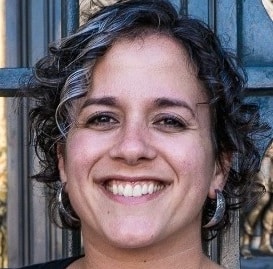 Since 2003, Dr. Fakhri Shafai has worked with autistic persons, their families, clinicians, and educators in various capacities. Her research is focused on sensory processing differences in autism spectrum disorder and how these differences are related to social competence, emotion processing, and anxiety. Currently, she works as the Research and Evaluation Project Coordinator for AIDE Canada, a federally-funded nonprofit that seeks to support autistic individuals, individuals with intellectual disabilities, and their families.
Check out AIDE Canada’s Interpreting Social Situations Interactive Video Course
Take the knowledge quiz
Can’t see the quiz below? Take it online HERE
Research Updates: What Can Monogenic Syndromes Tell Us About the Underlying Causes of Autism?
Free webinar at 1:00 p.m. Eastern time (US), May 27, 2026 Dr. Daniel Vogt, Ph.D., will discuss his current research on monogenic syndromes and what they can tell us

Sustained Potential as a Biomarker of Language Functioning in Autism
Free webinar at 1:00 p.m. Eastern time (US), April 15, 2026 Sustained potential (SP) is a neural response to periodic auditory stimuli registered with EEG 40Hz Auditory Steady-State Response.
Understanding Autism through the Lens of Sensorimotor Features and Early-Developing Brain Regions
Sensorimotor differences are commonly reported in autistic individuals. However, the daily-life impact and neurobiological basis of motor differences are not clear. This talk will discuss sensorimotor differences commonly reported in
Towards the Development of a Diagnostic Test for Autism Spectrum Disorder: Data Science Meets Metabolomics
Hear Juergen Hahn, Ph.D., ARI Scientific Advisory Board member, discuss how using machine learning can lead to biomarker discoveries in autism research. Handouts are online HERE
How Genetics is Shaping the Field of Autism Research
Learn about how research on genetic influences is shaping our understanding of autism. About the speaker: M. Pilar Trelles, MD, is a licensed and
Evidence That Speaks: Prioritizing Proven Communication Supports for Non-Speaking Autistic Children
Connie Kasari, PhD, details what contemporary research reveals about supporting non-speaking or minimally verbal autistic children. She highlights how far the field has come in the past two decades and emphasizes the